
Medical Marijuana Victory!

A picture named rxleaf.jpgToday, the United States Court of Appeals for the 9th Circuit made a major ruling, directing a preliminary injunction to prevent the Federal government from interfering with non-commercial medical marijuana activities in states where medical marijuana is legal!
Thanks for the heads up from the wonderful folks at Brutal Hugs and also The Volokh Conspiracy (which has some excellent analysis).
In its ruling, the 9th Circuit relied on the Commerce Clause of the Constitution (an approach that I’ve found very appealing, though not without concerns). It’s a strong ruling, and one that is likely to go to the Supremes (The Supreme Court earlier in Oakland had specifically noted that it was not ruling on Commerce Clause issues at that time).
The case is: ANGEL MCCLARY RAICH; DIANE MONSON; JOHN DOE, Number One; JOHN DOE, Number Two, Plaintiffs – Appellants, v. JOHN ASHCROFT, Attorney General, as United States Attorney General; ASA HUTCHINSON, as Administrator of the Drug Enforcement Administration, Defendants – Appellees.

In simple terms, the appellants had asked the court to prevent the federal government from using the CSA (Controlled Substances Act) against medical marijuana growth, distribution and use that is non-commercial. They claimed court relief was required because the fear of federal harrassment affected their ability to provide for their medical needs.
Here are some quotes from the decision (pdf):


We find that the appellants have demonstrated a strong likelihood of
success on their claim that, as applied to them, the CSA is an unconstitutional
exercise of Congress’ Commerce Clause authority.
We decline to reach the
appellants’ other arguments, which are based on the principles of federalism embodied in the Tenth Amendment, the appellants’ alleged fundamental rights
under the Fifth and Ninth Amendments, and the doctrine of medical necessity.

…[the appellants] contend that, whereas the earlier cases concerned
drug trafficking, the appellants’ conduct constitutes a separate and distinct class of activities: the intrastate, noncommercial cultivation and possession of cannabis for personal medical purposes as recommended by a patient’s physician pursuant to valid California state law.

Clearly, the way in which the activity or class of activities is defined is
critical. We find that the appellants’ class of activities–the intrastate,
noncommercial cultivation, possession and use of marijuana for personal medical
purposes on the advice of a physician–is, in fact, different in kind from drug
trafficking. For instance, concern regarding users’ health and safety is significantly different in the medicinal marijuana context, where the use is pursuant to a physician’s recommendation. Further, the limited medicinal use of marijuana as recommended by a physician arguably does not raise the same policy concerns regarding the spread of drug abuse. Moreover, this limited use is clearly distinct from the broader illicit drug market–as well as any broader commercial market for medicinal marijuana–insofar as the medicinal marijuana at issue in this case is not intended for, nor does it enter, the stream of commerce.

The ruling also quoted one of my favorite states’ rights quotes (which I’ve mentioned here before:

(“It is one of the happy incidents of the federal system that
a single courageous state may, if its citizens choose, serve as a laboratory; and try novel social and economic experiments without risk to the rest of the country.”)

The final result:

For the reasons discussed above, we reverse the district court. We find that
the appellants have demonstrated a strong likelihood of success on the merits. This
conclusion, coupled with public interest considerations and the burden faced by the
appellants if, contrary to California law, they are denied access to medicinal
marijuana, warrants the entry of a preliminary injunction. We remand to the district
court for entry of a preliminary injunction consistent with this opinion.

An interesting little bit in the footnotes of the decision. Apparently the court feels strongly enough about the overall purpose of the activity being outside the scope of the Commerce Clause provisions for federal intrusion, that they wouldn’t even mind if the seeds came from elsewhere (in other words, bringing in seeds from Canada or… to grow non-commercial medical marijuana would not, in itself, be enough to trigger the Commerce Clause:

At oral argument, we questioned counsel for the appellants about the origin
of the marijuana seeds used by the appellants. Counsel for the appellants assured
us that they came from within California. Regardless, we find that the origin of the
seeds is too attenuated an issue to form the basis of congressional authority under
the Commerce Clause. In McCoy we discussed the fact that the film and camera in
that case were manufactured out of state. We expressed “substantial doubt” that
this fact (which was part of the statute’s jurisdictional hook in that case) “adds any
substance to the Commerce Clause analysis.” McCoy, 323 F.3d at 1125. Here, the
potential out-of-state production of seeds used by the appellants for their
noncommercial activity is a significantly attenuated connection between the
appellants’ activities and interstate commerce. If the appellees sought to premise
Commerce Clause authority in this case solely on the possibility that the seeds used
by the appellants traveled through interstate commerce, we would conclude, as we
did in McCoy with respect to the out-of-state manufacture of the film and camera,
that this, by itself, “provides no support for the government’s assertion of federal
jurisdiction.”

This is all great news, and a cause for celebration, even though (and perhaps to some extent because) it will be appealed to the Supreme Court.
Update: Here’s a quote from Angel McClary Raich for you:

“Not too many people get to come up against someone who is as evil as (US Attorney General) John Ashcroft and actually win and that feels very good,” she said.

Posted in Uncategorized | Comments Off on Medical Marijuana Victory!

Kenneth Walker, Drug War Victim

From the Georgia Ledger Enquirer

Walker, 39, was among three other men riding inside a gray GMC Yukon when it was stopped Wednesday night as part of a drug investigation.æ The unarmed man was fatally shot by a Muscogee County Sheriff’s Deputy after authorities said Walker failed to comply with the deputy’s commands to reveal his hands.æ The three friends were not arrested and were later released.æ Authorities later learned there was no information that Walker was involved in any kind of criminal activity.

In some communities, black teens are told to never run down the street because their parents fear the teens may be shot by some police officer who may mistake them for criminals….

When reports of an unarmed Walker being fatally shot circulated, blacks may have been shocked, but they were not surprised.æ Law enforcement has never been viewed as user-friendly in the black community.

And from WTVM (beware: linked page behaving erratically, particularly in Safari).

In a tearful interview, long-time best friend of Kenneth Walker says the thirty-nine year old was a role model to the community.

“He was a family man. He was man of morals and principles. He lived for his daughter,” says Tim Crumbley….

Walker was working at Blue Cross-Blue Shield at the time of his death. Both he and his wife were active in the St. Mary’s Road United Methodist Church.

The funeral for Walker is set for Tuesday, December 16 at St. Mary’s church. His wife Cheryl is requesting only family and friends attend the service.

Posted in Uncategorized | Comments Off on Kenneth Walker, Drug War Victim

Ventura nails the ONDCP on MSNBC

Check out this amazing transcript from Jesse Ventura’s America, which ran Saturday on MSNBC.
Jesse had Rob Kampia of the Marijuana Policy Project as a guest, along with Tommy Chong’s attorney, and then Jesse went one-on-one with Tom Riley of the Drug Czar’s Office and tore him a new one.
Really, take a moment and read it all. It’s very entertaining!

Posted in Uncategorized | Comments Off on Ventura nails the ONDCP on MSNBC

Presidential Nomination Endorsement

Drug WarRant is officially endorsing Dennis Kucinich as the Democratic nominee for President in 2004.
A picture named dennis_photo.jpgMr. Kucinich has already received the highest grades possible from Granite Staters for Medical Marijuana (an A+), based on his strong positions in favor of medical marijuana and his stated willingness to sign an executive order permitting its use. He was the first candidate to support the Truth in Trials Act; he was co-sponsor of the States’ Rights to Medical Marijuana Act; and has voted for other provisions to help medical marijuana candidates.
And now, the most extraordinary issue statement to come from any major candidate — certainly far beyond any of the other Democratic or Republican candidates.
It’s long, but it is unprecendented, so I am re-printing it here in its entirety. Dennis Kucinich’s statement on Marijuana Decriminalization:

With the enactment of the Volstead Act in 1919, America embarked on a social experiment known as Prohibition. Prohibitionists rejected the idea that people could be trusted to drink in moderation, arguing that alcohol use inevitably led to moral corruption and undesirable behavior. Accepting these premises led Congress to conclude that a federal ban on the production and sale of alcohol would go a long way toward reducing crime, and addressing a variety of other social problems. Within a decade, however, Americans discovered that the criminally-enforced prohibition of alcohol produced harmful side effects. The rise of black markets empowered organized crime to an unprecedented degree. In some of America’s largest cities, local governments had been heavily corrupted by the influence of organized crime. The black market provided minors with easy access to bootlegged alcohol, which was frequently of poor quality and unsafe to drink. Faced with the disastrous consequences of Prohibition, Congress decided in 1933 to repeal the Volstead Act. Since that time, the government has implemented the much more successful policy of focusing law-enforcement efforts on irresponsible alcohol users who endanger the rights of others.

Unfortunately, current drug policy fails to take into account the lessons of Prohibition. The law regards all users as abusers, and the result has been the creation of an unnecessary class of lawbreakers. According to the FBI’s Uniform Crime Report, more than 734,000 individuals were arrested on marijuana charges in 2000. This number far exceeds the total number of arrestees for all violent crimes combined, including murder, rape, robbery, and aggravated assault. Eighty-eight percent of those arrested were charged with possession only. Convicted marijuana offenders are denied federal financial student aid, welfare, and food stamps, and may be removed from public housing. In many cases, those convicted are automatically stripped of their driving privileges, even if the offense is not driving related. In several states, marijuana offenders may receive maximum sentences of life in prison. The cost to the taxpayer of enforcing marijuana prohibition is staggering–over $10 billion annually.

The harsh nature of punishments for marijuana offenses is even more disturbing if one considers the racial bias of the war on drugs. According to data collected by the National Household Survey, on an annual basis the overall difference between drug use by blacks and whites is quite narrow. However, a recent national study found that African-Americans are arrested for marijuana offenses at higher rates than whites in 90% of 700 U.S. counties investigated. In 64% of these counties, the African-American arrest rate for marijuana violations was more than twice the arrest rate for whites. Questions of racial bias affect the integrity of investigations, arrests, and prosecutorial discretion. If we truly aspire to the ideal of “Justice for All,” then these unjust racial disparities are unacceptable outcomes for the American justice system.

The rationale for continuing this draconian policy of marijuana prohibition is unclear. Statistical evidence shows that marijuana use follows a pattern very similar to that of alcohol. Most marijuana users do so responsibly, in a safe, recreational context. These people lead normal, productive lives–pursuing careers, raising families, and participating in civic life. In addition, marijuana has proven benefits in the treatment of numerous diseases, such as providing a valuable means of pain management for terminally ill patients. In either of these contexts, there is no rational justification for criminally enforced prohibitions. These unnecessary arrests and incarcerations serve only to crowd prisons, backlog the judicial system, and distract law enforcement officials from pursuing terrorists and other violent criminals.

New Mexico’s 2001 state-commissioned Drug Policy Advisory Group determined that marijuana decriminalization “will result in greater availability of resources to respond to more serious crimes without any increased risks to public safety.” This finding is backed by the successful implementation of such policies in twelve states. The state governments of Alaska, California, Colorado, Maine, Minnesota, Mississippi, Nebraska, Nevada, New York, North Carolina, Ohio, and Oregon approved these measures after the National Commission on Marijuana and Drug Abuse recommended that Congress adopt a national policy of marijuana decriminalization. A recent CNN/Time magazine poll indicates overwhelming public support for this approach, with 72% of Americans favoring fines as a maximum penalty for minor marijuana offenses, and 80% approving of marijuana used for medical purposes.

A Kucinich administration would work to implement a drug policy that removes responsible recreational users and medical users of marijuana from the criminal justice system, in order to redirect resources toward the following goals:

  • Enforce penalties for those who provide marijuana to minors.
  • Enforce penalties for those who endanger the rights of others through irresponsible use, such as driving under the influence.
  • Develop drug treatment programs focused on rehabilitation, rather than incarceration.
  • Support the efforts of state governments in developing innovative approaches to drug policy.
  • Improve drug education by emphasizing science over scare tactics.
  • Implement a Department of Justice program that would review the records of, and consider for sentence reduction or release, inmates convicted for non-violent marijuana offenses.

Now, some of you may have concerns about this endorsement, because you don’t agree with other policies, or because you consider him unelectable. (Even more so with my endorsement of Blake Ashby as the Republican nominee.)
However, we no longer can afford to allow Drug Policy Reform to be a side issue in the political debate. The Drug War has grown too big and too dangerous, and ultimately overshadows all other policy with its tentacles deep in the economic and social conditions of our country, the future of civil liberties, and the relationship of the government and the people.
I urge everyone to support candates based on their views on the drug war. If enough will do this, even if these candidates don’t win their nomination, the support they received may elevate Drug Policy Reform to a higher place on the agenda.

Posted in Uncategorized | Comments Off on Presidential Nomination Endorsement

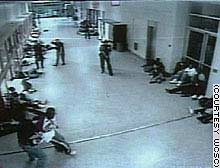
Police up Goose Creek without a paddle…

A picture named goosecreek.jpg
(Background here in case you somehow missed it).
The only good thing to come out of the police raid at Stratford High School is the fact that it has actually received a good deal of national attention and outrage. It’s important that we keep a fire under the issue (so it doesn’t plame out), so you’ll continue to hear updates on this site.
First, a strong editorial from the Rock Hill, S.C. Herald:

We hope state Attorney General Henry McMaster will give due attention to the case of the drug sweep at Stratford High School in Goose Creek. A reprimand from McMaster might help prevent such highly questionable police behavior from occurring at other schools in the state…

This incident has provoked outrage nationwide, and for good reason. Police conduct clearly was over the top, and officers are fortunate no students were shot or otherwise injured.

In this case, the biggest threat to law and order was the police themselves. We hope McMaster will waste no time in reviewing this case.

Next, some national attention:

The Rev. Jesse Jackson said Thursday he wants U.S. Attorney General John Ashcroft to intervene and call for the prosecution of police involved in the Nov. 5 drug search at Stratford High School in Goose Creek and the fatal shooting two days later of a mentally ill black man in North Charleston.

In a separate move in the drug-raid case, the state chapter of the American Civil Liberties Union plans to file a lawsuit Monday on behalf of 20 students. It claims Goose Creek officers used excessive force, falsely imprisoned students and violated search and seizure laws, said Executive Director Denyse Williams.

“We just want to make sure this never happens to any child in any school again,” she said….

“We want to meet with Ashcroft on this matter,” Jackson said. “The Department of Justice must assure people their basic rights will be protected.”…

I think it’s unconscionable, bigoted and reprehensible to have unholstered guns and dogs in the presence of children…” said the Rev. Joseph Darby of Morris Brown AME Church in Charleston. “I would hope (Jackson’s) visit is followed up by positive action by local leadership.”

Parent Sharon Smalls said she hopes Jackson’s presence will unite residents.

“I think the community thinks this is a black-and-white issue, and it’s not,” said Smalls, who said officers slammed her son to the ground. “It’s a right-and-wrong issue.”

I’d pay money to be in the room when Jesse Jackson asks John Ashcroft to investigate drug war abuses.
Finally, check out Marsha Rosenbaum’s article Stop Pointing Guns at Our Kids last week at Alternet:

Today’s parents, like those in Goose Creek, are skeptical of policies that demonize and frighten their teenagers without ensuring their health, well-being, and safety. If total abstinence isn’t a realistic alternative, we want our teens to be educated about drugs by giving them scientific, honest information, not exaggerated claims designed (unsuccessfully) to scare them. We want school policies that protect students without jeopardizing the future of those who make immature mistakes. We want counseling and support, rather than humiliation, suspension, expulsion, or, as in the case of Stratford High, violence.

Our children’s safety should be top priority when it comes to educating them about drugs. Pointing guns at their heads is not the answer.

Update:The ACLU has an 8 minute video of the event, narrated by the principal, available here (RealAudio file), today’s press release is here, and the text of their complaint filing is here.

Posted in Uncategorized | Comments Off on Police up Goose Creek without a paddle…

Pain Public Policy

You may remember my September post on Severe Pain Care as a victim of the Drug War.
Some positive steps are happening now.
1. Act quickly. This is very short notice, but I just got the information this evening.
The Association of American Physicians and Surgeons is hosting an important Hill briefing on Tuesday, and they need your help in encouraging your Congressmen to attend. So give your rep a call on Monday morning if you can.
Call the D.C. offices.æThe main switchboard is 202.224.3121. They will patch you through to your members.
It sounds like a great briefing, including 5 groups taking part in the Coalition Against Prosecutorial Abuse (CAPA):
The Politics of Pain Management: Public Policy and Patient Access to Effective Pain Treatments, featuring

  • Ronald T. Libby, PhD., Professor,University of North Florida: “DEA investigation initiatives and funding sources”
  • Rev. Ronald Myers, Sr., M.D., Founder, President, American Pain Institute: “Effects on African-American community”
  • James Martin, President, 60 Plus Association, “Seniors’ and end-of-life concerns”
  • Julie Stewart, Families against Mandatory Minimums
  • William Hurwitz, M.D., J.D., Indicted pain management specialist-McLean, VA: “‘Deserving’ vs. ‘undeserving’ patients?”
  • Jane M. Orient, M.D., Clinical lecturer,University of AZ, Executive Director, AAPS: “Opioid-phobia and reluctance to treat patients”
  • Siobhan Reynolds, Founder & President, Pain Relief Network, “Impact on families and economic issues”
  • DEA Diversion Program (Invited)
  • Moderator: Kathryn Serkes, President, Square One Media Network
More than 48 million people in the U.S. suffer from chronic pain, according to the National Institutes of Health.æRecent high-profile news cases of opioid usage have placed the issue on the front pages, including a debate over dependency vs. addiction, who is “deserving” and who is “undeserving,” of opioid treatment, and whether pain patients should be subjected to different standards of personal scrutiny than others.

The DEA claims drug diversion has reached crisis proportions, justifying increased investigative initiatives that frequently circumvent the Congressional appropriations process. Physicians are prosecuted and imprisoned, and patients sentenced based on pill counts.

Medical research and treatment has made tremendous advances in pain management, but is public policy keeping up?æAnd is law enforcement discouraging patient access to treatment as a result of prosecution of physicians under the Controlled Substances Act?

This distinguished panel will examine the current state of pain management, law enforcement initiatives, patient experiences, economic impact of untreated pain, funding sources, sentencing guidelines, H.R. 3015 prescription drug database act, and solutions for cooperation between lawmakers, regulators, law enforcement and the medical community.

æ
Tuesday, Dec. 16,æ2003, B-338 Rayburn House Office Building, 12 Noon-1:30 pm, (luncheon served)
To register, visit www.aapsonline.org, email Jeremy Snavely at briefing@aapsonline.org, fax 520.325.4230, or call 800.635.1196 by 12:00 noon, Monday, Dec 15.


2. Start planning now for Pain Relief Network’s March on Washington, April 18-20, 2004

Posted in Uncategorized | Comments Off on Pain Public Policy

Catching up…

I’ve been (and still am) under the weather and having a hard time keeping up with posting, but here’s a few things worth checking out:
“bullet” On the local front, it looks like Ed Rosenthal’s visit to University of Illinois was a success (unfortunately I was busy here and we had our hempfest the next day). A good article on the student organizations in the Daily Illini.
“bullet”The New York Times brings back Brandeis’ views on states’ rights in this interesting article. I have always been a fan of his statement on the value of states’ rights:

…to stay experimentation in things social æand economic is a grave responsibility.æ Denial of the æright to experiment may be fraught with serious æconsequences to the nation.æ It is one of the happy æincidents of the federal system that a single courageous æstate may, if its citizens choose, serve as a ælaboratory, and try novel social and economic æexperiments without risk to the rest of the country.

While the Times article doesn’t talk about the drug war, it is particularly in regard to the drug war that I think this viewpoint has relevance (Medical marijuana is a prime example, as is the development of industrial hemp).
“bullet”
Canada loosened some of the rules regarding use of medical marijuana as required by the courts, but patients are upset, claiming that the government is ignoring court orders. Some are planning lawsuits, and the decisions led one group to proclaim:

Ontario Consumers for Safe Access to Recreational Cannabis is happy to
inform consumers that, because of Health Canada’s failure to implement
constitutional Medical Marijuana Access Regulations, wide-open marijuana
legalization is back in Ontario!

And Ottawa stays pot charges in 4,000 cases.
At the same time, we have the U.S. still threatening Canada’s borders for being lax on marijuana. (Am I crazy for worrying that someone in the U.S. administration watched “Canadian Bacon” or the South Park movie and didn’t realize they were fiction?)
“bullet” Steve Kubby’s application for asylum in Canada was unfortunately denied. An appeal will be coming. If he is sent to the United States, he will die. Help him out by writing a letter.
“bullet” Also be sure to check out my Daily Reads on the left for other good news and perspectives.

Posted in Uncategorized | Comments Off on Catching up…

Tommy Chong Updates

“bullet”Chong Family Values in the LA Weekly:

The word most used by Paris and Precious Chong to describe their father’s ordeal is “surreal.” “They couldn’t have picked a kinder, more generous person to throw in jail than my father,” Paris says. Today the family remains afraid of what the Justice Department might yet do to their father, and it is plain from speaking to them that they fear being quoted as saying anything that might antagonize it. “I don’t want to say anything against the government because I don’t want anything to happen to my children,” says Shelby. In a strange twist of fate, the Chongs have become an example for every American family in this new age of conformity.

“Growing up, I’d always had this fear that our family wasn’t like everyone else,” says Precious Chong, “and that we’d be punished for it someday — and then this happened. My parents never locked their doors. They do now.”

It’s a great article that details the entire sorry episode. Read the whole thing.
“bullet”Tommy Chong’s Next Movie by Dean Kuipers

“The DEA agent that busted me said, ‘We don’t want your son or your wife, although we could indict them, too. But if you just give yourself up, don’t make it a political or a publicity thing, then nothing will happen to you,’” Chong adds. “And the last thing that he said to me was, ‘You don’t want to be a martyr.'”

Martyrdom, however, was nearly impossible to avoid considering the current political climate. On the day of the arrest, Ashcroft held a press conference in Washington, D.C. and applauded efforts to scrub the dirty Internet, saying, “The illegal drug paraphernalia industry has invaded the homes of families across the country without their knowledge.” John Walters, Drug Czar and head of the ONDCP, author of the deadly “shoot first” policy in Peru that killed a missionary flying a small plane in 2001, said, “We will act decisively to protect our young people from the harms of illegal drugs.” John Brown, acting administrator of the DEA, summed it all up, noting, “People selling drug paraphernalia are in essence no different than drug dealers.”

Yep, another great article.
“bullet”Chongstock Concert

The bands Mule, Mike Stinson, Dale Peterson, Random Joe Citizen and Cody Lapow
are doing a show in support of the Free Tommy Chong movement. The event takes
place Saturday, December 13th at THE CINEMA BAR, 3967 SEPULVEDA BLVD, CULVER
CITY, CA, 310-390-1328. Be sure to bring a pen to sign petitions.

“bullet”The Commies Nice to see all the comments on Tommy Chong on Comedy Central’s new Award Show, including giving him the award for “Best Comedian Behind Bars” accepted by Cheech who started the celebrity audience chanting “Free Tommy Chong!”

Posted in Uncategorized | Comments Off on Tommy Chong Updates

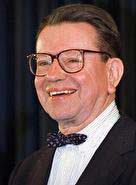
Senator Paul Simon, R.I.P.

A picture named simon.jpgThe man with the bow tie died today. What a life!

Smart, honest, courageous – a delightfully geeky little man with enormous integrity and the ability to lead. I’m proud to say I had the opportunity to meet him and hear him speak.
We can still heed his words, like these remarks about sentencing in the drug war from an article he co-wrote with Dave Kopel in 1996 for the National law Journal:

Harsh laws and severe punishments, observed Confucius, are a sign that something is wrong with the state. But you don’t need to be a brilliant philosopher to recognize that America’s prisons are in a state of crisis.

Federal mandatory minimums have made a bad situation worse. In large part because the rigid minimums make no distinction among the circumstances of cases, today’s sentences for non-violent crimes lack any semblance of balance. If a man helps unload a boat of hashish just once to pay for his wife’s cancer treatments (an actual case), he is subject to the same minimum sentence as the mastermind of the whole scheme.

As a prime example of the irrationality of mandatory minimums, we should consider the sentencing disparity for users of different types of cocaine. Under the drug laws, five grams of crack cocaine draws the same mandatory minimum five-year sentence as 500 grams of powder cocaine. No scientific or crime-policy reason justifies the enormous 100-to-1 ratio. The gaping difference is particularly troubling because it has racially charged implications: Eighty-five percent of federal crack prisoners are African-American, while powder cocaine offenders are more likely to be white or Hispanic….

We suggest, however, that it might be more sensible to target the violence rather than the drug of use. As a result of present policy, more than 20 percent of federal prisoners are low-level, non-violent drug offenders. Various 1996 congressional bills proposing increases in the mandatory minimum penalties for powder cocaine, methamphetamine and other drugs continue to undermine efforts of the Sentencing Commission to maintain rationality in the administration of justice. Chief Justice William H. Rehnquist has noted that mandatory minimums “frustrate the careful calibration of sentences from one end of the spectrum to the other that the guidelines were intended to accomplish.”

Expensive as prison is, it can be a bargain when it keeps violent criminals from preying on the innocent. But loading our prisons with non-violent offenders, often for drug violations, means that there is less room for the more dangerous repeat criminals. The end result is that we have a higher percentage of people in prisons than any other nation on earth — South Africa being a distant second. And yet, although we have passed the dubious milestone of having more than a million Americans in prison, we feel less safe today than we formerly did….

The reason that we have highly-paid, experienced federal judges is to judge.

No sensible judge would send a young person to prison for five years without parole for a first offense involving possession of a small quantity of drugs. Judges can make the distinction between a person who makes a solitary mistake, and a person who directs a major criminal enterprise.

Yet, because of the congressionally imposed mandatory minimums, judges are prevented from taking the facts of a case into account during sentencing. Long ago, Plato wrote, “We should exhibit to the judges . . . the outline and form of the punishment to be inflicted . . . But when a state has good courts, and the judges are well trained and scrupulously tested, the determination of the penalties or punishments which shall be inflicted on the guilty may fairly and with advantage be left to them.” That wisdom still stands.

We’ll miss you.

Posted in Uncategorized | Comments Off on Senator Paul Simon, R.I.P.

Odds and Ends

“bullet”The U.S. Military: A Creeping Civilian Mission – a chilling article about the dangerous diversions of military missions to civilian activities (often because of the war on drugs – remember Ezequiel Hernandez.
“bullet”17 Students File Suit Over School Drug Raid – This is great news. They’re fighting back over the atrocity that occurred there last month.
A big thanks to Loretta Nall of the USMJP and Dan Goldman of SSDP, who went to Goose Greek and met with parents and students and helped inform them of their rights.
“bullet” Serial Catowner has added a new Guest Rant to my site companion site: Not just a war on a plant.
“bullet” More news of the past week from Drug Sense Weekly and Drug War Chronicle.
“bullet” As usual, LastOneSpeaks has some good stuff today, including a link to Paul Armentano’s essay on John Walter’s failed media campaign to equate marijuana consumption with supporting terrorism.

Posted in Uncategorized | Comments Off on Odds and Ends