*Who is the United States…

Who is the United States Drug Czar?
In looking through my referral logs today, I realized that an unusual number of people today were googling the phrase “Who is the United States Drug Czar?” And they’re coming to my site looking for this information. Perhaps it’s an assignment for a class? Well, I thought I’d help out.
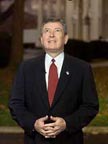
A picture named czar.jpg
Who is the United States Drug Czar? John P. Walters, Director of the White House Office of National Drug Control Policy (ONDCP). He received his training working with a former drug czar turned gambler, William Bennett (they also wrote a book together, sort of a fantasy novel called “Body Count.”)
What is a czar?
We turn to the dictionary:

czar: A male monarch or emperor, especially one of the emperors who ruled Russia until the revolution of 1917.

Hmmm… let’s look further…

czar: autocrat
autocrat: a ruler having unlimited power; despot
despot: a person who wields power oppressively; a tyrant.
tyrant: an oppressive, harsh, arbitrary person

What is a drug czar?

A harsh and oppressive person, who arbitrarily wields power to determine what Americans must believe about some drugs.

So what does he do? It is his job to spend taxpayer money to tell pot smokers that they are terrorists. It is his job to ignore science and distort facts. It is his job to campaign against local elections. It is his job to threaten Canada for considering enlightened laws. It is his job to justify a failed government policy.
He has some assistants called Component Deputy Directors.
A picture named barthwell.jpg
Andrea Barthwell, MD, Deputy Director of Demand Reduction. She helps the drug czar ignore medical science, so that sick and dying people who depend on medical marijuana can die quicker and in greater pain. Extra credit: Go to this website and send Andrea a fax! It’s fun and free!
A picture named burns.jpg
Scott Burns, Deputy Director of the Office of State and Local Affairs. He gathers together distortions, exaggerations, and false information and sends it out to local prosecutors and district attorneys. So his job is to make sure that local officials are spreading lies.
A picture named crane.jpg
Barry Crane, Deputy Director for Supply Reduction. He goes to other countries and tells them that they, too, should bow down to the Drug Czar, and that they should also believe what the czar tells them to believe. Barry makes sure that foreign countries pass laws that the czar likes.
Now, you can go to the ONDCP site to get more information, but if you’d just like to put the short answer in your homework assignment, here it is:

John P. Walters is the United States Drug Czar, also known as the Director of the White House Office of National Drug Control Policy. He is the government’s minister of drug policy disinformation, insuring that historical experience and scientific data do not interfere with the propagation of government policies on select drugs.

Update (9/20/04): Andrea Barthwell resigned to go run for Senate in her home state of Illinois, but the state republican committee selected Maryland’s Alan Keyes, instead. Barry Crane retired. There are acting deputies in their place (Addison “Tad” Davis IV, and Len Wolfson) as of this date.

Posted in Uncategorized | 1 Comment

*Law Enforcement’s Drug of Choice*

Law Enforcement’s Drug of Choice

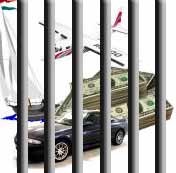
Civil asset forfeiture is the most infamous game in law enforcement. In its pure form, seizing the luxury cars, boats, homes and cash of drug dealers can be a useful tool in taking profit out of crime. But in the real world, far too many police and sheriff’s offices use it to finance and enrich their operations, leading to startling abuses.

This is the beginning of “Law Enforcement’s Drug of Choice” – an article by Robyn Blumner which appeared in yesterday’s Ft. Worth Star-Telegram (originally published in the St. Petersburg Times on Aug. 17 as “Police too addicted to lure of easy money”).
A picture named forfeiture.jpg
Civil Forfeiture is one of the many abuses that have been linked to the government’s war on (some) drugs. Criminal Forfeiture requires that a defendent be convicted of a crime, and then their assets under certain situations may be seized. Civil Forfeiture, on the other hand, is a delightfully imaginative perversion of the Constitution which essentially states that:

  • You have $1,000 cash in your car.
  • Nobody has $1,000 cash unless they’re dealing drugs.
  • The money obviously must be guilty of being involved in a drug transaction
  • Money is not a person, and therefore is not entitled to constitutional rights or the same proof of guilt. You would have to prove that the money is not guilty.
  • We’re not going to charge you with a crime, because we have no evidence. However, we’ve determined your money is guilty, so we’re taking it.
  • Now we can buy that new radio for the police car we’ve wanted.

Obviously, civil forfeiture had to be very creative, and, once again, the government got through the objections of the courts by claiming that it’s a necessary tool for law enforcement to rid the country of the evil of drugs. And, once again, the Supreme Court grudgingly bought it, somehow deciding that the government’s assertions were more important than a couple of paragraphs written a long time ago…

Amendment IV: The right of the people to be secure in their persons, houses, papers, and effects, against unreasonable searches and seizures, shall not be violated, and no warrants shall issue, but upon probable cause, supported by oath or affirmation, and particularly describing the place to be searched, and the persons or things to be seized.
Amendment V: …nor shall any person be subject for the same offense to be twice put in jeopardy of life or limb; nor shall be compelled in any criminal case to be a witness against himself, nor be deprived of life, liberty, or property, without due process of law; nor shall private property be taken for public use, without just compensation.

As this civil forfeiture became popular, law enforcement realized that this was a potential goldmine to cover budget shortages or to increase staffing, or buy equipment (since the seized assets went to the law enforcement units). Soon, many units were dependent on a certain amount of seizures each year to meet the expanded budgets. This blatant conflict of interest has made it profitable to target arrests based on potential seizures (see the case of Donald P. Scott on my Drug War Victims page for a horrible example of this).
The Civil Asset Forfeiture Reform Act of 2000, made possible by an amazingly diverse group of Senators, Representatives and organizations, reformed some of the problems, by shifting some of the burden of proof to the government and making it easier to reclaim improperly seized assets. However, the profit motive still exists.
Blumner continues by noting that, in order to try to curb the profit motive and stop abuse,

“Numerous states have enacted laws diverting some or all of asset-seizure profits into a state general fund or other specialized fund… But for nearly 20 years, the federal government has colluded with local law enforcement to skirt state law and put the money back into the pockets of the seizing agency.
Under the process known as adoption, the Justice Department actively encourages local policing agencies to turn over their seized assets.æ The department will then do the forfeiture and return 80 percent of seizure proceeds to the local agency.æ So for a mere 20 percent off the top, any pesky state laws can be circumvented.

Yes, the federal government flagrantly bypasses state law for profit!
There’s an organization leading the fight against civil forfeiture, called Forfeiture Endangers American Rights Foundation (F.E.A.R.). They’ve got a ton of resources on their site, including case law and background. Check out the Legal Information Institute’s article LII Backgrounder on Forfeiture for a good overview of the subject. Also of interest is “The Next Stage of Forfeiture Reform” by Eric D. Blumenson and Eva Nilsen, which gives some concrete suggestions for overturning forfeiture provisions, through legal defense strategies, and legislative efforts.
Oh, by the way… you might think that the reform act of 2000 had us headed toward reform… but that was before Patriot Act 1 and 2, Victory Act…

Posted in Uncategorized | Comments Off on *Law Enforcement’s Drug of Choice*

*Bolivia: Drug War Casualties*

Bolivia: Drug War Casualties
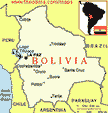
A picture named boliviamap.gif
Graham Gori’s AP report in yesterday’s New York Newsday on life in Bolivia during the drug war…

Ibuelo Alto, Bolivia – One morning in April, Hilaria Perez Prado began her day as always: hoping soldiers wouldn’t burst from the jungle and tear her farm to pieces.
They did come, though.æ They trampled her fields.æ And then one shot her in the chest as they left.

He goes on to relate how Washington has spent $470 million on “Plan Dignity.”
A picture named bolivigreen.jpg

They yanked out more than a billion plants.æ Bolivia went from supplying half of the United States’ cocaine demand – the crop brought an estimated $500 million into this country of 8 million people each year – to supplying very little.æ American diplomats called Plan Dignity their most successful anti-narcotics mission ever in South America.
But bananas, manioc root and other crops urged on peasant growers haven’t proved profitable because few buyers come to these isolated regions, and farmers have begun drifting back to coca.æ Coca production in Bolivia is up 23 percent since 2001, the White House Drug Policy Office says.
So anti-drug efforts have been intensified, bringing an escalation in tensions and conflict between soldiers and peasants.
Farmers plant homemade land mines in coca fields and put rat poison in low-hanging fruit in hopes soldiers will eat them.æ Troops sometimes resort to gunfire.

The farmers are hungry.

Stanley Schrager, former director of the narcotics section at the U.S.æ Embassy in La Paz, isn’t sympathetic to the argument that farmers must grow coca to survive.
“There is an idea out there – I call it the myth of the innocent coca farmer – that he is simply trying to put food on the table to feed his kids,” Schrager said.æ “But in reality he is at the beginning of a chain of events that ultimately leads to the drug trade and drug addiction in the United States, and thus bears some responsibility for the ruined lives which are the result.”

Thus the drug warriors exhibit, at the expense of the farmers, their lack of understanding of the failure of supply reduction. If you want to see what supply reduction looks like graphically, click here.

Posted in Uncategorized | Comments Off on *Bolivia: Drug War Casualties*

*New Links and Blogging Milestones…*

New Links and Blogging Milestones…
It’s been an interesting day, coming out of a delightful weekend in my blog world.
First, I met Jeff Trigg of RandomActOfKindness, a very bright and articulate defender of civil liberties who has a category on Decriminalization. Well, I met him in the blogosphere, but it was still great, and nice to discover that he’s in my home state. Check his site out.
Jeff was nice enough to link to me, which generated some other connections, including another interesting local blog – Bill Dennis’ Peoria Pundit. Bill has the fascinating pedigree of a “former liberal Democrat, former member of Libertarian Party, now small-‘L’ libertarian and anti-idiotarian media critic.” Bill was kind enough to link to me as well
Anyway, partly as a result of this Illinois blogaround over the weekend… somehow,
blogdex decided that Drug WarRant was an element of “the most contagious information currently spreading in the weblog community” and listed me in the top 50 this morning. This resulted in a spike of visitors today (Hey, I’m new enough to consider 50 or 60 new visitors a major spike!) and…
I got my first nasty, incoherent email today, from a process server who didn’t like my views.
Thus ends my first month as a blogger. I think I’ve made it!

Posted in Uncategorized | Comments Off on *New Links and Blogging Milestones…*

*Tulia – 35 Pardoned!*

Tulia – 35 Pardoned!
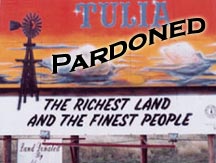
A picture named tuliapard.jpgOn Friday, Texas Governor Rick Perry pardoned 35 people who had been convicted due to an atrocious abuse of drug war tactics, a corrupt undercover deputy, and prosecutorial misconduct, which resulted in the 1999 arrest of 10% of this small town’s black population on drug charges without evidence.
Within hours of the pardons, lawyers for defendants in the case filed a federal civil rights lawsuit naming more than 40 defendants, including the drug task force that supervised the sting and every county belonging to the task force.
For some good background on the case, check out Alternet’s article on race issues in Tulia, PBS’s Tulia timeline, one of Bob Herbert’s articles which brought national attention to the issue, the NAACP Legal Defense Fund work on the Tulia case, and MAPinc list of newspaper articles.
The important thing to remember here is that this is one case. Tulia must be a rallying cry to stop abuses in the war on drugs everywhere. There will be more Tulias as long as our unconstitutional policies continue.

Posted in Uncategorized | Comments Off on *Tulia – 35 Pardoned!*

*Odds and Ends around the…

Odds and Ends around the Drug Reform Community
bullet imageVisit the Drug Policy Alliance Action Center. This is a great way to get involved easily. The site gives you specific action items regarding current legislative bills or issues, and one-click ways to send pre-written (or your own) letters, faxes, or emails to your Congresssional representatives or other public officials. If you wish, it will remember your address, representatives, and which action items you’ve already done. Some of the current action items include:

bullet imageLast One Speaks has an excellent piece on Operation Eradication in Columbia.
bullet imageA candlelight vigil is being planned outside the Supreme Court September 22, as a memorial to medical marijuana patient and activist Cheryl Miller, who died June 7.
bullet imageThe October issue of Playboy magazine (not available online) is out with a feature by Dean Kuipers on the “Siege at Rainbow Farm.” Rainbow Farm was a Michigan meeting ground for marijuana activists. Kuipers’ dramatic re-creation of the deadly five-day standoff documents what really happened. (If you don’t want to pick up Playboy, here’s online info about the Rainbow Farm tragedy.) [Update: Full text now available online.]
bullet imageMedia Awareness Project has a focus alert on Donald Rumsfeld’s recent statements regarding supply side failure.
bullet imageDrugsense Weekly – a roundup of this week’s news in the drug war.
bullet imageStop the Drug War has its new issue of Drug War Chronicle online.

Posted in Uncategorized | Comments Off on *Odds and Ends around the…

*”Patriot Act, Victory Act, Despot…

“Patriot Act, Victory Act, Despot Act”
A picture named ashcroft.jpg
“The cause we have chosen is just.”
With these words, John Ashcroft kicks off his tour to defend the destruction of American freedom.
Attorney General John Ashcroft is giving more than a dozen speeches around the country at taxpayer expense to promote the Patriot Act; and a new even more dangerous bill has just been introduced called the Victory Act (which practically defines drug dealers as terrorists).
— Read the rest of the story —

Posted in Uncategorized | Comments Off on *”Patriot Act, Victory Act, Despot…

*Reactions to story on Canadian…

Reactions to story on Canadian MPs
The Globe and Mail had some followups today on the story of MPs asking John Walter’s office to help defeat a Canadian marijuana bill. The editorial staff, while avoiding full condemnation, observed that “They look like sneaks, and deserve to be criticized.” A delightful letter to the editor gave the MPs a little more specific guidance, and actually brought up the “treason” word.

Posted in Uncategorized | Comments Off on *Reactions to story on Canadian…

*Canadian politicians ask U.S. to…

Canadian politicians ask U.S. to interfere with their legal system
Very interesting article in the Globe and Mail. On July 8, Deputy Drug Czar Barry Crane and other U.S. officials met with a group of Liberal MPs.

According to minutes of the meeting, a written copy of which was seen by The Globe and Mail, one of the MPs said the U.S. drug officials could help halt the bill by warning Canada about potential difficulties at the border and with trade if it were passed.
Another MP was quoted as saying that Dr. Crane and his officials should return to Washington to tell their superiors that they should make the consequences of passing the legislation clear to Canada.

Not that John Walters needed any encouragement to demonize Canada or threaten border retaliations. He had already begun to do that within a day of the introduction of new legislation in Canada.
The startling part of this story, is that officials in the Liberal Party in Canada actually seem to be encouraging a foreign power to interfere with their legislative process! Outrageous.
Of course, lost within all the controversy over Canada’s attempt to decriminalize marijuana (while still keeping tons of penalties, and even adding some stiffer ones), is that fact that, due to a quirk in the law (and the responsible actions of the Canadian judiciary combined with the lack of responsibility among many of the politicians), in many parts of Canada today, there is currently no law prohibiting marijuana possession or use – a very confusing situation to many.
However, despite the fact that many people have been able to smoke marijuana this summer without fear of arrest, morality hasn’t been destroyed, Canada’s youth have not become corrupt, crime hasn’t risen, and the sky hasn’t fallen (well, the lights did go out, but that was Cleveland’s fault).

Posted in Uncategorized | Comments Off on *Canadian politicians ask U.S. to…

*Where have all the blogs…

Where have all the blogs gone?
Sorry if you’ve had trouble accessing this page recently. Salon’s blog servers have gone down at least twice today — this after days of slow access due to increased traffic caused by NY Times article about The Julie/Julia Project. Very frustrating. Please bear with it, and if you can’t get through, check back later.

Posted in Uncategorized | Comments Off on *Where have all the blogs…