*Catching up*

Catching up
A number of things came up recently that slipped through the cracks on this blog as I reported on other issues, and I thought I’d do some catching up with our Drug Czar…
bullet imageInteresting reading: “John P. Walters Marijuana Rhetoric Could Prove Bush Re-election Liability” at BBS News.
bullet imageA dangerous trend: Nine states have passed zero tolerance laws regarding drug use and driving. While I agree that driving while impaired is wrong and should be punished, these laws involve drug tests which do not test impairment, but rather whether there are residual traces of the drug in your system (like if you smoked a joint a couple of days ago). In some cases, a positive test could mean a 20-year sentence. Naturally John Walters is calling for nation-wide implementation of these laws. This story describes the issues involved.
bullet image“Bush team’s prohibition drug policy is a bust” Bruce Alexander Knight writes this excellent OpEd for the Oregonian, which includes:

Unfortunately the drug czar has not yet learned the central lesson that prohibition doesn’t work.


Drug Czar on Continuing Campaign of Lies
I noticed a blitz last week of press releases picked up by Yahoo News, targeting cities around the country with new statistics regarding drug abuse and emergency room visits. (Yahoo did identify them as press releases. However they were published without question.)

In every one of these articles you’ll find the following:

“This report proves that marijuana is more harmful than many people think,” said White House Director of National Drug Control Policy John Walters. “The rising levels of marijuana potency that we’ve seen over the last several years correspond with dramatic increases in people seeking emergency medical care for marijuana-related incidents

Now the source of this startling information is DAWN: Drug Abuse Warning Network, which states that a main purpose for providing statistics is to assist the DEA and the ONDCP in their efforts, and also admits (pdf) that there have been serious questions raised about the methodology used.

The complexities and limitations of the system, coupled with lack of detailed historical documentation, lead to inevitable misinterpretation of DAWN data…There was little public documentation of DAWN’s data quality, and a few published studies raised concerns that measurement error in DAWN was substantial and systemic…Because DAWN monitors episodes, not individuals, data are misinterpreted if analysts view them as prevalence measures…DAWN data were often assumed to represent heavy or chronic drug users, although the validity of that assumption has never been assessed.

So what does DAWN do? They pick hospitals in major cities and have someone there check the charts for mentions of drug abuse connected with emergency room visits (including toxicology tests and patient interviews). For their purposes, the term “Drug Abuse” includes any use of an illegal drug for recreational purposes. Up to 4 drugs can be “mentioned” per patient visit. And it doesn’t matter if the drug mentioned actually had any connection to the reason for the visit. According to DAWN:

For example, if records for a given patient “mentioned” marijuana, this does not mean that marijuana was the only drug involved in the ED [Emergency Department] visit or that the marijuana caused the ED visit.

Now the final DAWN report showed that there were 47 marijuana “mentions” per 100,000 population. This doesn’t even mean 47 people per 100,000. It could be the same guy 47 times. And 3/4 of those cases involved more than one drug.
So let’s review Walters’ statement again:

“This report proves that marijuana is more harmful than many people think,” said White House Director of National Drug Control Policy John Walters. “The rising levels of marijuana potency that we’ve seen over the last several years correspond with dramatic increases in people seeking emergency medical care for marijuana-related incidents.

What a load of crap.

Posted in Uncategorized | Comments Off on *Catching up*

*A Wake-up Call for Local…

A Wake-up Call for Local Communities
Walter in Denver has the the details on a $1 billion lawsuit against Bethlehem, PA on behalf of John Hirko, Jr., a 21-year-old man who was shot 11 times in the back by police in a drug raid that also burned down his house.
A picture named cash.gif
Yes, that’s $1 billion with a B.
John Hirko is one of the unfortunates profiled on my Drug War Victims page, and finally a wrongful death suit is coming forward. However the suit turns out, it may serve as an important wake-up call that there are consequences to the unconscionable way we fight this failed war.
Time and time again, the families of drug war victims watch while the police are cleared with the words “justifiable shooting.” And really, in many cases that’s right. It’s often not the fault of the police that they’ve been put into this military-style confrontation that so often results in collateral damage.
Unfortunately, it may take actions like this to make communities wake up and realize that drug task forces are a liability. In this case, a huge taxpayer liability. The family of Donald P. Scott received a settlement of $5 million from county and feds in a fatal botched raid in Malibu, where the authorities were hoping to seize his property. Denver paid off $400,000 for killing Ismael Mena.
Meanwhile, the lawyers for the Tulia defendants are filing a civil rights lawsuit against a variety of county entities, and Swisher County (realizing that they’re in enough trouble) has refused to help the prosecutor in that case in the defense of misconduct charges.
The taxpayers are already dumping tons of money down the drain in the war on drugs, but the government has been largely successful in hoodwinking the public as to their contribution. Now that local budgets may be decimated by lawsuits, people may start to wake up. In fact, every local council that cooperates with a federal drugs task force should be made aware of this.
If your city or county is involved, or considering involvement with, a military-style drugs task force, stop by their next council meeting and ask how they plan to come up with a billion dollars if they’re sued. Ask them if they’ve come up with an acceptable number of innocent casualties to go along with their decision to use no-knock raids for pot. And then let me know how they react.

Posted in Uncategorized | Comments Off on *A Wake-up Call for Local…

*Netherlands leads the way again…*

Netherlands leads the way again…
A picture named rx.gif
RandomActOfKindness covers the latest episode of sanity in the Netherlands. It seems that the Netherlands is allowing marijuana to be sold in pharmacies and covered by insurance.
Interestingly, “The Dutch Health Ministryæsays itæhas already fielded calls for progress reports from officials in Germany, Britain, Belgium and Luxembourg.” (via Deutsche Welle)
How long will it take for our Drug Czar to issue a statement showing how the Netherlands is immoral?

Posted in Uncategorized | Comments Off on *Netherlands leads the way again…*

*Privacy, your home, and legal…

Privacy, your home, and legal pot in Alaska
One of the interesting things that happened while I was gone this weekend is the fact that the Alaska Court of Appeals ruled on Friday in favor of the legal use of marijuana in certain circumstances.

“With regard to possession of marijuana by adults in their home for personal use, (the law) must be interpreted to prohibit only the possession of 4 ounces or more of marijuana,” wrote Court of Appeals Judge David Stewart in the conclusion of the unanimous decision.

The ruling made the national news as one of those odd tidbits that they like to insert, but the media has missed some of the larger ramifications of the ruling.
The background: Article 1, section 22 of the Alaska Constitution reads:

“The right of the people to privacy is recognized and shall not be infringed…”

Read that again. “The right of the people to privacy is recognized and shall not be infringed.” Sounds like Alaskans were pretty smart when they put together their constitution.
In 1975, in the case of Ravin vs. the State of Alaska, the Alaska Supreme Court ruled that personal in-home use of marijuana was a protected right of privacy. Later, the legislature set a limit of 4 ounces for personal use.
Then, in 1990, a voter initiative criminalized marijuana possession of any amount. The current case of David Noy finally challenges that statute by claiming that the statute violates constitutional rights. The Court of Appeals agreed, and now it’s up to the Alaska Supreme Court to hear an appeal. It seems unlikely that the Supreme Court will overturn itself, when it made such a compelling argument in Ravin.
The Ravin case is particularly interesting. It’s worth reading the full original decision, authored by the late Justice Rabinowitz.
Rabinowitz not only drew upon the specific right of privacy in the Alaska constitution, but also brought up a huge list of cases involving the United States Supreme Court establishing a right of privacy, and a particular expectation of privacy in one’s own home. Rabinowitz concluded that privacy in the home is a fundamental right and requires a greater level of proof for the government to assert an interest.

the authority of the state to exert control over the individual extends only to activities of the individual which affect others or the public at large as it relates to matters of public health or safety, or to provide for the general welfare. We believe this tenet to be basic to a free society. The state cannot impose its own notions of morality, propriety, or fashion on individuals when the public has no legitimate interest in the affairs of those individuals. The right of the individual to do as he pleases is not absolute, of course: it can be made to yield when it begins to infringe on the rights and welfare of others.
Further, the authority of the state to control the activities of its citizens is not limited to activities which have a present and immediate impact on the public health or welfare. It is conceivable, for example, that a drug could so seriously develop in its user a withdrawal or amotivational syndrome, that widespread use of the drug could significantly debilitate the fabric of our society. Faced with a substantial possibility of such a result, the state could take measures to combat the possibility. The state is under no obligation to allow otherwise “private” activity which will result in numbers of people becoming public charges or otherwise burdening the public welfare. But we do not find that such a situation exists today regarding marijuana. It appears that effects of marijuana on the individual are not serious enough to justify widespread concern, at least as compared with the far more dangerous effects of alcohol, barbiturates and amphetamines….
Thus we conclude that no adequate justification for the state’s intrusion into the citizen’s right to privacy by its prohibition of possession of marijuana by an adult for personal consumption in the home has been shown. The privacy of the individual’s home cannot be breached absent a persuasive showing of a close and substantial relationship of the intrusion to a legitimate governmental interest. Here, mere scientific doubts will not suffice. The state must demonstrate a need based on proof that the public health or welfare will in fact suffer if the controls are not applied.

Now attention is again being paid to this 1975 Alaska decision, and it is likely that the Alaska Supreme Court will affirm it. This is of particular interest as the United States Supreme Court has shown a significant current interest in privacy, particularly privacy in the home. This could pave the way to a future U.S. decision regarding federal marijuana laws.

Posted in Uncategorized | Comments Off on *Privacy, your home, and legal…

*Labor Day Reading…*

Labor Day Reading…
I will be leaving for far northern Wisconsin this weekend, away from WiFi and cell phone reception, to visit my sister at her new log home, so I won’t be posting. However, I leave you with reading assignments.
bullet imageCheck out Jacob Sullum’s article in Reason: Altered Minds: Former drug warriors turn against prohibition, which includes some revelations from former drug warrior Forest Tennant:

Tennant says the September 11 attacks had a big impact on his thinking about drug policy. He recognized that the connection between drugs and terrorism, cited by the government to justify the war on drugs, was actually a consequence of prohibition, which makes the drug trade a highly lucrative business and delivers it into the hands of criminals. “We’ve got to take the profit out of it,” he says.
Tennant is also troubled by the impact that U.S. drug policy has on countries such as Colombia, where it empowers thugs and guerillas, sows violence, undermines law and order, and wreaks havoc on the economy. And he believes the war on drugs has fostered systemic corruption in the United States. “We need to try something different,” he says.

A picture named sayyes.jpg
While you’re at it, check out Jacob Sullum’s book “Saying Yes: In Defense of Drug Use.” Jacob is a senior editor at Reason, and his book is an excellent analysis of the drug war and the distortions of the government drug warriors. He even has the nerve to counter propaganda by introducing the reader to people who have used drugs and haven’t destroyed their lives, but rather are successful contributing members of society — the same people the government wants to put behind bars at taxpayer expense. Get it and read it. It may just expand your mind.
bullet imageAs always, don’t miss the weekly issue of Drug Sense Weekly. This week’s issue (just out today), gives an excellent review of the most important articles this week (and gives this blog the Quote of the Week!) Check it out.
bullet imageLast week, I sent you to check out Stop the Drug War’s new issue of Drug War Chronicle. I was slightly premature, as the issue was delayed for reasons that are sadly clear when you read the first item in the newsletter, which is now complete online.
It’s a powerful issue, as it also includes Executive Director David Borden’s full letter (to Washington DC, Chief Judge Rufus King), in which David proclaims his intent to commit an act of civil disobedience related to the war on drugs. While I, and others, may disagree with his decision, there’s no doubt that the letter has a powerful and important message. Read it.
bullet imageFor something on the much lighter side… I know that many of my new friends have discovered this site in recent weeks, and you may not have waded through past posts and articles. If you haven’t read it yet, check out my piece on the government’s war on burgers in 2043. Just for fun.

Posted in Uncategorized | 1 Comment

*Meth / Speed / Crystal…

Meth / Speed / Crystal / Glass / Crank /Tweak / Yaba / Ice
A picture named methblog.jpg
Peoria Pundit notes that two bills were signed by the Governor of Illinois this week to combat methamphetamine production (As Bill says “Yeah, well, that ought to solve the problem.”) These actually join other bills which were passed earlier this summer.
All over the country, legislators are clawing over each other in the race to pass enhanced penalties for every conceivable factor related to the “methamphetamine epidemic.” As always, they display either moronic ignorance or willful avoidance of the truth (or both) that criminal prohibition of a high demand commodity has never solved a problem. In the willful avoidance category, there is the case last month of the U.S. Attorney in Hawaii who lied about the prevalance of the ice problem to try to convince lawmakers to amend the state constitution to expand wiretapping and search/seizure provisions. And don’t forget the prosecutor that decided to charge a meth lab suspect with two counts of manufacturing a nuclear or chemical weapon!
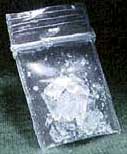
Methamphetamine is a relative of amphetamine (speed) which, on the street, is in the form of a powder, pills, or larger crystals, and is administered through snorting, smoking, oral ingestion, or injection. It effects can include increased energy and alertness, decreased need for sleep, euphoria, excessive talking, weight loss, nausea, paranoia, hallucinations, itching, depression, and a wide variety of other factors. Long term use can be very damaging to organs, and cause severe psychological problems or death. Methamphetamine causes significant tolerance as well as psychological dependency.
A picture named spun.jpg
The effects of meth are presented in a wildly surreal manner in the recent offbeat comedy “Spun” (Jason Schwartzmann, Mickey Rourke, John Leguizamo, Mena Suvari). The movie won’t give you a realistic view of meth use, yet in a bizarre way it gives a more accurate visceral feeling than any description could.
Meth is prescribed for both children and adults for ADD under the brand name Desoxyn, and has chemical relationships to both Ritalin and Adderall.
The U.S. Government dispensed methamphetamine to our soldiers in World War II and Korea and even today, U.S. fighter pilots in Afghanistan were given amphetamines (a milder chemical relation) to stay awake on bombing runs.
Illegal meth labs are a direct result of the war on drugs. Increased controls on pharmaceutical grade amphetamines created a market for the homemade variety. This resulted in a tendency to go for the stronger high of meth (just as beer was replaced with high-proof whiskey during alcohol prohibition). Illegal meth production has grown in part due to the fact that it can be inexpensively made (through a dangerous process involving a number of toxic substances which can be found normally on farms and in drug stores). As enforcement and interdiction of other illegal drugs stiffened, the cheapness of meth increased its popularity, despite the dangers in production and use.
As opposed to pharmaceutical products, homemade labs produce drugs of uncertain and often dangerous quality, and leave toxic chemicals as a byproduct. This is reminiscent of another kind of illegal lab in another era of prohibition:

Adding lye to the mash accelerated fermentation but caused the consumer’s lips to swell painfully. Another shortcut consisted of routing the mixture through an automobile radiator and adding battery acid to the brew. This mixture could be cooked off in one day instead of the usual three or more. But lead absorbed from old radiators or improperly soldered connections could cause lead poisoning, partial paralysis or jake leg, permanent brain damage, or death. In addition to these harmful results, improperly manufactured moonshine might contain additives that tasted bad, even if they were not permanently disabling. Moonshiners and law officers have reported discovering dead raccoons, snakes, frogs, possums, and hogs floating in vats of untended moonshine.

In that previous prohibition, stories abound of entire towns burned to the ground by illegal alcohol stills. And today, explosions of instable meth labs destroy homes and apartments.
Another prohibition, another set of problems caused by our drug policies.

[For more information on meth, see the Vaults of Erowid]
Posted in Uncategorized | Comments Off on *Meth / Speed / Crystal…

*Who is the United States…

Who is the United States Drug Czar?
In looking through my referral logs today, I realized that an unusual number of people today were googling the phrase “Who is the United States Drug Czar?” And they’re coming to my site looking for this information. Perhaps it’s an assignment for a class? Well, I thought I’d help out.
A picture named czar.jpg
Who is the United States Drug Czar? John P. Walters, Director of the White House Office of National Drug Control Policy (ONDCP). He received his training working with a former drug czar turned gambler, William Bennett (they also wrote a book together, sort of a fantasy novel called “Body Count.”)
What is a czar?
We turn to the dictionary:

czar: A male monarch or emperor, especially one of the emperors who ruled Russia until the revolution of 1917.

Hmmm… let’s look further…

czar: autocrat
autocrat: a ruler having unlimited power; despot
despot: a person who wields power oppressively; a tyrant.
tyrant: an oppressive, harsh, arbitrary person

What is a drug czar?

A harsh and oppressive person, who arbitrarily wields power to determine what Americans must believe about some drugs.

So what does he do? It is his job to spend taxpayer money to tell pot smokers that they are terrorists. It is his job to ignore science and distort facts. It is his job to campaign against local elections. It is his job to threaten Canada for considering enlightened laws. It is his job to justify a failed government policy.
He has some assistants called Component Deputy Directors.
A picture named barthwell.jpg
Andrea Barthwell, MD, Deputy Director of Demand Reduction. She helps the drug czar ignore medical science, so that sick and dying people who depend on medical marijuana can die quicker and in greater pain. Extra credit: Go to this website and send Andrea a fax! It’s fun and free!
A picture named burns.jpg
Scott Burns, Deputy Director of the Office of State and Local Affairs. He gathers together distortions, exaggerations, and false information and sends it out to local prosecutors and district attorneys. So his job is to make sure that local officials are spreading lies.
A picture named crane.jpg
Barry Crane, Deputy Director for Supply Reduction. He goes to other countries and tells them that they, too, should bow down to the Drug Czar, and that they should also believe what the czar tells them to believe. Barry makes sure that foreign countries pass laws that the czar likes.
Now, you can go to the ONDCP site to get more information, but if you’d just like to put the short answer in your homework assignment, here it is:

John P. Walters is the United States Drug Czar, also known as the Director of the White House Office of National Drug Control Policy. He is the government’s minister of drug policy disinformation, insuring that historical experience and scientific data do not interfere with the propagation of government policies on select drugs.

Update (9/20/04): Andrea Barthwell resigned to go run for Senate in her home state of Illinois, but the state republican committee selected Maryland’s Alan Keyes, instead. Barry Crane retired. There are acting deputies in their place (Addison “Tad” Davis IV, and Len Wolfson) as of this date.

Posted in Uncategorized | 1 Comment

*Law Enforcement’s Drug of Choice*

Law Enforcement’s Drug of Choice

Civil asset forfeiture is the most infamous game in law enforcement. In its pure form, seizing the luxury cars, boats, homes and cash of drug dealers can be a useful tool in taking profit out of crime. But in the real world, far too many police and sheriff’s offices use it to finance and enrich their operations, leading to startling abuses.

This is the beginning of “Law Enforcement’s Drug of Choice” – an article by Robyn Blumner which appeared in yesterday’s Ft. Worth Star-Telegram (originally published in the St. Petersburg Times on Aug. 17 as “Police too addicted to lure of easy money”).
A picture named forfeiture.jpg
Civil Forfeiture is one of the many abuses that have been linked to the government’s war on (some) drugs. Criminal Forfeiture requires that a defendent be convicted of a crime, and then their assets under certain situations may be seized. Civil Forfeiture, on the other hand, is a delightfully imaginative perversion of the Constitution which essentially states that:

  • You have $1,000 cash in your car.
  • Nobody has $1,000 cash unless they’re dealing drugs.
  • The money obviously must be guilty of being involved in a drug transaction
  • Money is not a person, and therefore is not entitled to constitutional rights or the same proof of guilt. You would have to prove that the money is not guilty.
  • We’re not going to charge you with a crime, because we have no evidence. However, we’ve determined your money is guilty, so we’re taking it.
  • Now we can buy that new radio for the police car we’ve wanted.

Obviously, civil forfeiture had to be very creative, and, once again, the government got through the objections of the courts by claiming that it’s a necessary tool for law enforcement to rid the country of the evil of drugs. And, once again, the Supreme Court grudgingly bought it, somehow deciding that the government’s assertions were more important than a couple of paragraphs written a long time ago…

Amendment IV: The right of the people to be secure in their persons, houses, papers, and effects, against unreasonable searches and seizures, shall not be violated, and no warrants shall issue, but upon probable cause, supported by oath or affirmation, and particularly describing the place to be searched, and the persons or things to be seized.
Amendment V: …nor shall any person be subject for the same offense to be twice put in jeopardy of life or limb; nor shall be compelled in any criminal case to be a witness against himself, nor be deprived of life, liberty, or property, without due process of law; nor shall private property be taken for public use, without just compensation.

As this civil forfeiture became popular, law enforcement realized that this was a potential goldmine to cover budget shortages or to increase staffing, or buy equipment (since the seized assets went to the law enforcement units). Soon, many units were dependent on a certain amount of seizures each year to meet the expanded budgets. This blatant conflict of interest has made it profitable to target arrests based on potential seizures (see the case of Donald P. Scott on my Drug War Victims page for a horrible example of this).
The Civil Asset Forfeiture Reform Act of 2000, made possible by an amazingly diverse group of Senators, Representatives and organizations, reformed some of the problems, by shifting some of the burden of proof to the government and making it easier to reclaim improperly seized assets. However, the profit motive still exists.
Blumner continues by noting that, in order to try to curb the profit motive and stop abuse,

“Numerous states have enacted laws diverting some or all of asset-seizure profits into a state general fund or other specialized fund… But for nearly 20 years, the federal government has colluded with local law enforcement to skirt state law and put the money back into the pockets of the seizing agency.
Under the process known as adoption, the Justice Department actively encourages local policing agencies to turn over their seized assets.æ The department will then do the forfeiture and return 80 percent of seizure proceeds to the local agency.æ So for a mere 20 percent off the top, any pesky state laws can be circumvented.

Yes, the federal government flagrantly bypasses state law for profit!
There’s an organization leading the fight against civil forfeiture, called Forfeiture Endangers American Rights Foundation (F.E.A.R.). They’ve got a ton of resources on their site, including case law and background. Check out the Legal Information Institute’s article LII Backgrounder on Forfeiture for a good overview of the subject. Also of interest is “The Next Stage of Forfeiture Reform” by Eric D. Blumenson and Eva Nilsen, which gives some concrete suggestions for overturning forfeiture provisions, through legal defense strategies, and legislative efforts.
Oh, by the way… you might think that the reform act of 2000 had us headed toward reform… but that was before Patriot Act 1 and 2, Victory Act…

Posted in Uncategorized | Comments Off on *Law Enforcement’s Drug of Choice*

*Bolivia: Drug War Casualties*

Bolivia: Drug War Casualties
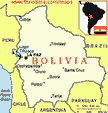
A picture named boliviamap.gif
Graham Gori’s AP report in yesterday’s New York Newsday on life in Bolivia during the drug war…

Ibuelo Alto, Bolivia – One morning in April, Hilaria Perez Prado began her day as always: hoping soldiers wouldn’t burst from the jungle and tear her farm to pieces.
They did come, though.æ They trampled her fields.æ And then one shot her in the chest as they left.

He goes on to relate how Washington has spent $470 million on “Plan Dignity.”
A picture named bolivigreen.jpg

They yanked out more than a billion plants.æ Bolivia went from supplying half of the United States’ cocaine demand – the crop brought an estimated $500 million into this country of 8 million people each year – to supplying very little.æ American diplomats called Plan Dignity their most successful anti-narcotics mission ever in South America.
But bananas, manioc root and other crops urged on peasant growers haven’t proved profitable because few buyers come to these isolated regions, and farmers have begun drifting back to coca.æ Coca production in Bolivia is up 23 percent since 2001, the White House Drug Policy Office says.
So anti-drug efforts have been intensified, bringing an escalation in tensions and conflict between soldiers and peasants.
Farmers plant homemade land mines in coca fields and put rat poison in low-hanging fruit in hopes soldiers will eat them.æ Troops sometimes resort to gunfire.

The farmers are hungry.

Stanley Schrager, former director of the narcotics section at the U.S.æ Embassy in La Paz, isn’t sympathetic to the argument that farmers must grow coca to survive.
“There is an idea out there – I call it the myth of the innocent coca farmer – that he is simply trying to put food on the table to feed his kids,” Schrager said.æ “But in reality he is at the beginning of a chain of events that ultimately leads to the drug trade and drug addiction in the United States, and thus bears some responsibility for the ruined lives which are the result.”

Thus the drug warriors exhibit, at the expense of the farmers, their lack of understanding of the failure of supply reduction. If you want to see what supply reduction looks like graphically, click here.

Posted in Uncategorized | Comments Off on *Bolivia: Drug War Casualties*

*New Links and Blogging Milestones…*

New Links and Blogging Milestones…
It’s been an interesting day, coming out of a delightful weekend in my blog world.
First, I met Jeff Trigg of RandomActOfKindness, a very bright and articulate defender of civil liberties who has a category on Decriminalization. Well, I met him in the blogosphere, but it was still great, and nice to discover that he’s in my home state. Check his site out.
Jeff was nice enough to link to me, which generated some other connections, including another interesting local blog – Bill Dennis’ Peoria Pundit. Bill has the fascinating pedigree of a “former liberal Democrat, former member of Libertarian Party, now small-‘L’ libertarian and anti-idiotarian media critic.” Bill was kind enough to link to me as well
Anyway, partly as a result of this Illinois blogaround over the weekend… somehow,
blogdex decided that Drug WarRant was an element of “the most contagious information currently spreading in the weblog community” and listed me in the top 50 this morning. This resulted in a spike of visitors today (Hey, I’m new enough to consider 50 or 60 new visitors a major spike!) and…
I got my first nasty, incoherent email today, from a process server who didn’t like my views.
Thus ends my first month as a blogger. I think I’ve made it!

Posted in Uncategorized | Comments Off on *New Links and Blogging Milestones…*