
Your brain on drug ads

Via Hit and Run:
Carson B. Wagner, an advertising professor at the University of Texas at Austin, has studied the effects of anti-drug ads on viewers using a technique known as response latency measurement of strength of association:

“Rather than directly asking research participants to express their attitudes about drugs, response latency SOA measures allow researchers to gauge people’s attitudes without their direct knowledge, thereby yielding a more accurate measure of the research participant’s attitudes that better predicts behavioral decision-making under various conditions.” …

The results showed that people who self-reported their attitudes after viewing the anti-drug ads expressed strong anti-drug sentiments, as opposed to the weaker anti-drug sentiments measured in the response latency tests after viewing the same anti-drug ads. These findings suggested that, compared to response latency measures, self-report measures exaggerated the effectiveness of anti-drug ads… “Based on these findings, the self-report surveys may have produced inflated claims of the ads’ effects,” he concludes.

Not good news for the Drug Czar, who likes to fund his own studies to insure positive results and continued funding, so I doubt that the administration will be paying much attention to this study.
The study also notes that anti-drug ads may actually increase curiosity about drugs. This makes a lot of sense. I remember when I was a cigarette smoker and the Cancer Society would run nasty anti-smoking TV ads. Intellectually, I would watch the ad and say “I’ve got to quit,” but at the same time I would reach for a cigarette, triggered by the ad.

Posted in Uncategorized | Comments Off on Your brain on drug ads

Economies dwarfed by drug trade

The San Jose Mercury News had an article by Mark McDonald on Sunday; Heroin Trade Booms in Afghanistan: New Wealth Helps Terrorists Rebuild, Threatens Neighbors
This is more of what we’ve already talked about — the heroin trade is really the only hope for significant economic activity in Afghanistan, but unfortunately, since it’s illegal, all the money goes to the criminal sector, including terrorists. But this article also talks about the neighbors:

At particular risk is Tajikistan, a desperately poor, predominantly Muslim nation of 7 million.

Tajikistan produces almost no opium or heroin of its own, but it has become a natural pathway for traffickers because of its 900-mile border with Afghanistan. …

Tajikistan, isolated and landlocked, has almost no industrial economy other than a state-controlled aluminum smelter.æ Foreign investment is minuscule; not a single American firm is operating in the country.

The national budget is barely $300 million a year, a pittance compared with the size of the drug economy.æ The heroin trade alone, Yuldashov said, is 10 times as big.

10 times as big as their entire national budget! That’s a recipe for disaster, and enforcement ain’t gonna help.
We’ve got to look toward new international drug policies.

Posted in Uncategorized | Comments Off on Economies dwarfed by drug trade

Mayor’s getting ideas

Some good ones.

VANCOUVER, British Columbia — Mayor Larry Campbell has proposed legalizing and taxing marijuana sales … to raise money for treatment of the effects of more dangerous drugs. …

Campbell said regulation should be similar to that of tobacco and alcohol, citing the example of Amsterdam, where cultivation and sales of marijuana are legal within certain regulations.

Studies indicate fewer residents of the Netherlands than, for example, Americans, have tried marijuana, and cannabis use among Dutch schoolchildren has fallen, he said.

“The conclusion is pretty clear,” he said. “Legal, regulated sale of marijuana may actually produce less consumption.”

Looks like that new study I’ve been talking about is getting around.

Posted in Uncategorized | Comments Off on Mayor’s getting ideas

A really bad trip

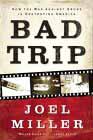
Joel Miller, senior editor of World Net Daily Books, is coming out with a new book: “Bad Trip: How the War Against Drugs is Destroying America.”. Today at WND, he talked about it:
A picture named BadTrip.jpg

Drug laws only have public support so long as drugs are deemed extremely dangerous. Every time an effort to crack down on drugs is made with new laws, politicians hype the threat caused by narcotics and other psychoactive substances in an attempt to whip the public into a frightened tangle of angst-ridden nerves.

More fear means more support for whatever is supposed to alleviate the fear, and more support means bigger budgets. Every politician knows how to exploit this peculiar form of calculus.

This doesn’t mean that drug abuse does not cause problems. It only means that pols have every incentive to inflate problems and stoke dread to get what they want, namely tougher prohibition measures.

But as I argue in my forthcoming book, “Bad Trip,” these measures amplify every problem drugs are supposedly the cause of: crime, corruption, destructive abuse, the whole nine kilos. It’s a bureaucratic make-work program — a self-justifying and self-perpetuating system that both deceives and bilks taxpayers to keep going.

Joel nails it. I look forward to reading the book, which I’ve added to my wish list.

Posted in Uncategorized | Comments Off on A really bad trip

A cartoon for drug warriors

A Drug War Cartoon
Posted in Uncategorized | Comments Off on A cartoon for drug warriors

Getting… the point

Thanks to David for pointing out a somewhat strange report about Haiti.
I hadn’t been aware of News Central TV before this. Apparently they’re trying to be some kind of national news network. I’m not impressed. They’ve got this guy named Mark Hyman who gives you “The Point” — apparently while missing it by a mile.
In a recent “Point,” he talks about Haiti and the departure of Aristide (spoken with the animation of a piece of wood):

A welcomed development since his departure is the drop in illegal drug shipments through Haiti and into the U.S. Robert Charles, head of the U.S. Bureau of International Narcotics and Law Enforcement Affairs, reported that drug traffickers thrived in Haiti because of political instability, economic hardships and corruption. Charles credits the new Haitian government, foreign troop presence and increased interdiction efforts for stopping the drug flow. …

Successful efforts to reduce the flow is good news for combating drug trafficking in the U.S.

And that’s The Point.

I’m Mark Hyman.

Is that the point? I’m wondering if what the New York Times reported might be at least a partial point…

Difficult as it may be to believe, people here say, life in the poorest nation in the hemisphere has gotten worse in the past two months.

The fact that people are starving and the price of rice has doubled might be an important point.
But why bother about the people when you’ve got drugs to stop? That’s certainly the view of foreign policy moron Robert Charles. Fortunately, not that many people take him seriously. I’ve already shown you his stupidity regarding Afghanistan.
I have another question for Mark Hyman. What does this “successful efforts to reduce the flow” mean? Has there been any evidence that drugs are less available? How do you successfully “reduce the flow”? How about the DEA seizing one million tons of cocaine? Well they did more than that between 1986 and 2002 with no apparent effect. What is the “point” of attempting to reduce the flow?
I’m going to give Mark a free lesson in drug economics:
Think of drug supply as a river, and drug demand as gravity. As long as there is gravity, the water in the river will find a way to flow. You can divert it and it goes around. You can take out buckets of water, but there’s always more coming. Focusing on drug flow in Haiti is stupid and (as long as people are starving) criminal.
Hey, Mark! Still think you know the point?

Posted in Uncategorized | Comments Off on Getting… the point

In Medina, Ohio, smoking pot is as bad as beating your wife

With court approval, Medina is re-implementing an unusual ordinance, which goes further than the state law and carries a mandatory three-day jail sentence.

While the rest of the state considers possession of less than 100 grams of marijuana to be similar, in a legal sense, to jaywalking – punishable by a $100 fine – Medina’s ordinance classifies it as a first-degree misdemeanor, the same category as domestic violence. …

… the ordinance makes carrying a marijuana cigarette in Medina a worse crime than possessing heroin, cocaine or methamphetamine.

None of those drugs carry mandatory jail time. …

If police follow through, Medina [population 25,000] will spend $20,000 a year to feed and jail people convicted under the marijuana law…

Well, after all, they just passed an income tax increase in Medina in November. They’ve got to spend it on something.
Just so you know what to avoid, Medina is just southwest of Cleveland, off I-71.

Posted in Uncategorized | Comments Off on In Medina, Ohio, smoking pot is as bad as beating your wife

Constitutional Shenanigans

You’ve heard me rail about Ernest Istook’s bizarre spending provision that would actually prevent metro systems from accepting advertising that promotes legalization of marijuana (despite what Istook says, it doesn’t prevent advertising illegal activites, but only advertising advocacy for a particular political position). It’s very hard to get any more unconstitutional than preventing the expression of a particular political viewpoint.
Well, a little over a week ago, the ACLU, Change the Climate, Drug Policy Alliance, and the Marijuana Policy Project
argued their case in court. I wasn’t able to report on it in detail at the time, but I’ve enjoyed reading the court filings and wanted to share a little with you.
Of course, Section 177 is so bad, it’s amazing the government lawyers are even able to mount a defense. In fact, their defense has depended on misdirection and outright inapplicable legal references. Embarrassing.
It makes the ACLU’s response (pdf) to the government’s defense (pdf) quite delightful to read. The ACLU realizes how absolutely consitutionally indefensible the government’s position is and they can’t help getting in some digs. (Of course, these sarcastic passages are in addition to detailed, strong constitutional arguments by the ACLU — the Memorandum of Plaintiffs (pdf) is a thing of beauty.)
Opening statement in the reply brief:

It is disappointing that the Government decided to attempt to defend the
indefensible – a statute designed, and already operating, to restrain one side of an active
political debate. Justice would better have been served had the Justice Department not
imposed the entire burden of defending the Constitution on the plaintiffs and the Court.

Ouch! Nice score. But wait, it gets better. The government had tried to argue that they weren’t regulating content since the metro system could, on their own, decide to eliminate all speech.

For example, a transit system could bar all advocacy statements relating to
marijuana use from any point of view. Of course that would unconstitutionally
discriminate against marijuana policy as a topic, so maybe the transit system could bar all
advocacy of legal change, or maybe all advocacy altogether, or maybe all advertising
altogether.

The Government might as well argue that a statute withholding federal funds from
transit systems that permit black women to sit in the front of the bus would be
constitutional because a transit system could comply in an even-handed manner by
removing all seats.

Oooh! Two points. But there’s more:

As the Court will recall from the conference setting the briefing schedule, the
filing of the opposition brief was delayed for some weeks to permit ample time for “coordination” among various unidentified organs of Government. In the brief’s closing peroration, however, we see exactly what that coordination has yielded:

An order enjoining enforcement of Section 177 would
undermine Congress’ legitimate interest in not promoting
or providing the means for the expression of ideas that run
contrary to and may serve to undermine federal policy
adopted to protect the public’s well-being.

Gov’t Opp’n Mem. at 22. This passage is followed by a “cf.” site to two cases that do not
support it, because the only direct support is to be found in the likes of Brave New World
and 1984.

There is no government interest, none at all, in suppressing ideas that run contrary to federal policy. There is rather an interest in robust free debate and expression, and in preventing government efforts to suppress ideas that run “contrary to federal policy.” That is exactly why Section 177 should be enjoined without further delay.

Game. Set. Match.
Now all we have to do is wait for the court decision.

Posted in Uncategorized | Comments Off on Constitutional Shenanigans

Marijuana shown not addictive, not gateway

The recent study comparing marijuana use in San Francisco and Amsterdam is a real blow to the drug warriors. Not only did it show that prohibition does not reduce marijuana use, there were a couple of other very interesting things in the study.
The full report is now available online as text and as a pdf with graphs.
I’ve had a little time to look at the study, and I’d like to share two particular tables with you, that go beyond the main reported results of the study.
The first one fairly effectively debunks the myth of marijuana as an addictive drug.

TABLE 1—Trajectories of Overall Career Use:

Pattern Amsterdam
No. (%)
San Francisco
No. (%)
1: declining 17 (7.9) 18 (6.8)
2: escalating 13 (6.0) 17 (6.4)
3: stable 24 (11.1) 5 (1.9)
4: increase/decline 104 (48.1) 133 (50.4)
5: intermittent 7 (3.2) 25 (9.5)
6: variable 51 (23.6) 66 (25.0)
Total 216 (100.0) 264 (100.0)
Claims that cannabis produces addiction or
dependence lead one to expect that many experienced users would report Pattern
2—escalation of use over time. But this pattern was reported by only 6% in both
cities, which means that 94% of respondents had overall career use patterns that did not entail escalation across careers.

This is something that is common sense to those who are familiar with how marijuana works, but it’s an important refutation to the drug warriors’ claims. It also shows the most common way cannabis is used — an increase followed by a decline. People use it for a while and then stop or reduce their use voluntarily — certainly not the trend of a dangerous drug.
Here’s another interesting table from the study. This one focuses on regular cannabis users in the two cities and the degree to which they experiment with other drugs.

TABLE 2—Prevalence of Other Illicit Drug Use, Lifetime and During the Past 3 Months:

  Amsterdam (n = 216) San Francisco (n = 264)
  LTP P3MP LTP P3MP
Cocaine 48.1 9.3 73.2 7.5
Crack 3.7 0.5 18.1 1.1
Amphetamines 37.5 1.9 60.4 4.5
Ecstasy 25.5 9.3 40.0 6.4
Opiates 21.8 0.5 35.5 2.7
LTP=Lifetime Prevalence, P3MP=Past 3 Months Prevalence

Note that in the city where prohibition is the rule, there is significantly higher rates of experimentation with other drugs. As opposed to the gateway theory, this indicates that prohibition actually increases the likelihood of using other illicit drugs.
As the study notes:

The “separation of markets,”
in which lawfully regulated cannabis
distribution reduces the likelihood that people
seeking cannabis will be drawn into deviant
subcultures where “hard drugs” also are sold
is one public health objective of Dutch decriminalization.

Looks like their idea works better than ours.
Good stuff. Would like to see the media run with this more, though.

Posted in Uncategorized | Comments Off on Marijuana shown not addictive, not gateway

Alternet has a big week

AlterNet.org’s Drug Reporter is a good source of articles, although usually spotty, with some long gaps between them. However, this past week has seen a burst of articles worth reading. Check these out:
“bullet” Hooray for Bruce Mirken’s Lies and the Lazy Reporters Who Repeat Them, where he takes to task the media that carry the government’s alarmist stories about pot potency without doing their job as reporters.

For shame.

Way to go, Bruce! We need more people keeping the mainstream media honest (particularly when the government is not).
“bullet” Erik Davis, in Don’t Get High Without It gives us a nice, detailed feature about the Vaults of Erowid, which may be the most comprehensive source of useful information about the wide range of drugs which are used.
Davis notes that the mainstream science channels have become less useful (particularly with all the biased research) and more people are turning to Erowid for information (including health professionals).

Though it largely ignores policy debates, Erowid is a striking example of guerrilla information war. Millions of people, particularly young people, regularly access a repository of data whose very accessibility erodes the coercive exaggerations, hysteria and outright lies common to government and mainstream-media discussion of drugs. In addition, the very form of Erowid, which presents a model of an honest and open-minded psychoactive culture, encourages intelligent decision making.

“bullet” Particularly appropriate on Mother’s Day is Martha Rosenbaum’s Personal Voices: A Mother’s Advice about Drugs. This is a great letter to any child who will be facing difficult choices.
“bullet” Ann Harrison in Counting the Costs of the Drug War, discusses an Independent Institute forum held this week, where analysts tried to quantify the real costs of the drug war.
A picture named DrugWarCrimes.jpg
The forum included Boston University economist Jeffrey A. Miron, who is author of the new book Drug War Crimes.

“There is no reason to think that the benefits of reducing myopic drug use balances the costs that prohibition places on society,” says Miron. “The best policy is to legalize drugs and do it sooner rather than later.”

It’s nice to see economists and analysts putting an additional legitimate voice to this issue that those of us in the drug reform community have known for years.

Posted in Uncategorized | Comments Off on Alternet has a big week