
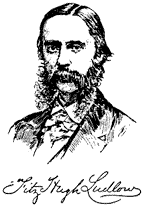
David Gross sent me a note that I thought I’d share with you:
A lot of people don’t know that cannabis had a real rennaissance in the
United States before the sixties… the 1860s, I mean.To American marijuana enthusiasts, Fitz Hugh Ludlow (1836-1870) is our
pioneer. He was the first to explore the cannabis high methodically and
adventurously and to come back to tell the tale. His book “The Hasheesh
Eater” is both thorough and thoroughly bizarre.Terence McKenna called him “part genius, part madman,” and said of his
writing that “Ludlow lies halfway between Captain Ahab and P.T. Barnum, a
kind of Mark Twain on hashish.”In recent years, biographers have learned more about Ludlow. One of the
songs he wrote is still sung today at graduation ceremonies as the Union
College alma mater. He worked for a time as a doctor, a lawyer, a teacher,
and an editor, as well as an author. He traveled across the continent as a
reporter on the American West, interviewing Brigham Young in Utah,
exploring Yosemite, and introducing East-coast readers to the young Mark
Twain. And he did all this before his thirtieth birthday. (So much for
“amotivational syndrome.”)I’ve spent the last decade researching the life and works of this cannabis
pioneer, and I’ve recently put out a new edition of his master-work “The
Hasheesh Eater” (which had been out of print since the 1970s):Posted in Uncategorized Comments Off on The “first” American “Stoned Age”America in the Great Stoned Age
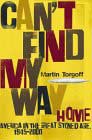
Via Hit and Run, Nick Gillespie in the Washington Post reviews a new book by Martin Torgoff: Can’t Find My Way Home: America in the Great Stoned Age, 1945-2000Each year, police make more than 700,000 marijuana-related arrests in the United States. Some 80 percent of public school districts still teach the Drug Abuse Resistance Education (D.A.R.E.) program even though the General Accounting Office has declared it ineffective. In 2003, comedian Tommy Chong went to federal prison for the high crime of selling bongs via the Internet. In such a climate, it takes courage to say anything positive about illegal drugs (or, as the federal government moralistically prefers to call them, illicit drugs).So Martin Torgoff’s Can’t Find My Way Home is a brave book, simply because it seeks to “chronicle . . . the use of illicit drugs in America without sensationalizing, apologizing, moralizing or demonizing.” It’s also a generally successful effort, in many ways as pleasantly and richly intoxicating as a double hit of Humboldt County, Calif.’s finest. …
Throughout, Torgoff drives home the point that not only have nearly half of Americans tried at least one “illicit” drug but also that such substances “have long since become part of a deeply personal and complicated prism of American life. . . . From politics to the arts, drugs have shaped the American cultural landscape . . . [and] entered the mainstream of American social experience.”
Posted in Uncategorized Comments Off on America in the Great Stoned AgeMontel on The O’Reilly Factor tonight to discuss marijuana
Unresolved Problems Segment
Montel Williams on medical marijuana
Bill speaks to talk show host Montel Williams about medical marijuana and how that usage could lead the way for the drug being fully legalized.I can’t watch it, so someone let me know how it went (or point me to transcripts).
Thanks to Scott for the tip.Posted in Uncategorized Comments Off on Montel on The O’Reilly Factor tonight to discuss marijuanaSunday reading
A recap of some interesting articles from today and earlier this week —
“bullet” A nice little piece on Valerie Corral in today’s Los Angeles Daily News: Tiny Pot Protagonist Beat Ashcroft In CourtSANTA CRUZ, Calif. — What do you do when you sue U.S. Attorney General John Ashcroft and win? Fifty-one-year-old Valerie Corral, a sinewy 5-foot-tall great-granddaughter of Italian immigrants, throws back her head, laughing, her hands reaching to the clouds, hips wiggling, feet stomping.“It’s my happy dance!” she says, throwing her arms around her husband, Mike.
She has also planted an acre of marijuana.
“bullet” On suspicionless drug testing, from Newsweek: Guilty Until Proven Innocent:
In advocating student testing, the White House has cited research showing testing to be an effective deterrent for soldiers, airline pilots, tugboat captains and a host of other professions. … Critics say the research is bogus—and that the testing is an outrageous violation of student privacy and civil liberties.But when asked whether her office knew of any scientific studies that supported its contention that drug testing students actually works, [Deputy Drug Czar Andrea Barthwell] responded simply, “No.” That, say critics, is proof that Bush’s new proposal is built not on solid evidence but the shaky ground of political ideology. …
Others contend that drug-testing kids may in fact exacerbate the problem it’s meant to solve. …
Hans York, a father of three and a deputy sheriff in Wahkiakum, Wash., sued his local school after it tried to force his son Aaron to submit to a testing program before joining the drama club. For York, having an official monitor his son for “normal sounds of urination” was not only a violation of his privacy, but sent him the message that he’s guilty until proven innocent. Says York: “As a guy who puts on a gun every day to go to work, I can tell you that a lot of the dialogue stops when you become the police.”
“bullet” Rep. Mark Souder (R-Indiana) is one of the most vicious drug warriors and the architect of the outrageous and racist HEA provision that denies federal financial aid to someone who was caught with marijuana when they were young (murderers and rapists not affected). He has invoked Jesus Christ as “justification” for some of his views, a technique that didn’t sit well with David Guard who wrote in the Decatur (IN) Daily Democrat.
In his struggle to preserve the lion’s share of the Higher Education Act’s ban on federal financial aid to students with even minor drug convictions, Rep. Mark Souder ( R-Ind. ) is touting his evangelical Christian background as evidence of the compassion of his proposed “fix” and the general righteousness of the Act’s extremely controversial “drug provision.” His logic should leave Christians of all denominations perplexed.Congressman Souder’s interpretation of Christian values with regard to this issue is bewildering to persons with even a basic understanding of the gospel of Jesus Christ. …
When fighting the war on drugs, Rep. Souder should be careful to not let disadvantaged students become casualties, and refrain from insinuating that the teachings of Jesus Christ support unjust, prejudiced policies.
Fortunately, there is still time for him to see the light and end this illogical, harmful crusade. I invite Congressman Souder to join the United Methodist Church, the Presbyterian Church, the Association of Jesuit Colleges and Universities, and the more than 70 other major national and state organizations representing the education, public health, criminal justice, and civil rights fields in support of full repeal of the HEA’s “drug provision.”
“bullet” Rep. Ron Paul (R-Texas) shows that you can be a Republican from Texas and be smart on drug policy. He has a new commentary on the attack on pain medicine: The War on Drugs is a War on Doctors
Doctors are not slaves, and they will not continue practicing medicine forever if the federal government insists on monitoring, harassing, fining, and even jailing them. Congress should take action to rein in overzealous prosecutors and law enforcement officials, and stop the harassment of legitimate physicians who act in good faith when prescribing pain relief drugs. Doctors should not be prosecuted for using their best medical judgment, nor should they be prosecuted for the misdeeds of their patients.“bullet” In Williams ‘scandal’ is a smoke screen, Dave Joseph writes about the “outrage” surrounding the Dolphins’ Ricky Williams testing positive for marijuana:
“How could he have done this to his teammates? How could he risk missing games? What are his young fans to think?”You’ve got to be kidding, right? Here’s a team changing offensive coordinators in May — a team without definitive answers at wide receiver and offensive line and with a draft pick that served time for DUI — and people are worried if Ricky might have inhaled?
Get a grip. Or some rolling papers. …
Think about this: The penalty for smoking pot in the NFL is the same as for cooking crack, shooting heroin or taking steroids. How irresponsible and insulting. …
Williams hasn’t done anything to hurt himself or the Dolphins. Blame the NFL, antiquated laws, a society that believes Reefer Madness is an accurate portrait of the effects of marijuana. But Williams isn’t a problem with the Dolphins.
Ironically, in the end, it was Williams who made the most sense in this cloud of controversy.
Asked if there was a message he’d like to send to children, Williams said: “They just have to look at the way I carry myself, look at the way I play the game, look at the way I practice, and look at what I do in the community.”
Everything else is a smoke screen.
Posted in Uncategorized Comments Off on Sunday readingUltimate Frisbee Harshed
Via Grassroots Buzz comes this horrible news from Drug War Chronicles.
First, the drug testers came for the chess players, and we did nothing. Now the inexorable, totalitarian logic of drug prohibition has invaded the laid-back domain of competitive Frisbee, or, in this world leery of copyright infringement, flying discs. The sport’s governing body, the World Flying Disc Federation (WFDF), voted May 2nd at its annual conference in Santa Cruz, California, to adopt the World Anti Doping Code, a drug testing regime that will subject Frisbee players to rigorous, Olympic-style drug testing.…competitive Frisbee-tossers will be punished not only for using performance enhancing steroids, but also for having smoked marijuana within recent days. … The United Kingdom Flying Disc Association News, warned its readers that even participation in student events sanctioned by the WFDF could get you drug tested.
What can you do to stop the infringement on the inalienable rights of Americans to enjoy competitive frisbee with a nice mellow high?
- Contact the board members of the WFDF and let them know what you think.
- Buy one of these marvelous flying discs from the Drug WarRant shop and tell the world what you think.
Update: The WFDF have clearly abandoned their roots in this decision. From Wikipedia:
Teenagers from Columbia High School in Maplewood, N.J. invented the game of Ultimate initially as a joke in 1968. The school council president and newspaper editor Joel Silver proposed a school Frisbee team on a whim in the fall of 1967. That spring a group of students got together to play what Silver claimed to be the “ultimate sports experience” by adapting the game Frisbee Football in 1968. Silver, now a Hollywood film producer (48 Hours, Weird Science, Lethal Weapon, Die Hard, The Matrix), first played Frisbee Football at a camp in Mount Hermon, Massachusetts in the summer of 1967. The students were not very athletic, either nerds or druggies. While the rules governing movement and scoring of the disc have not changed, the early Columbia High games had no sidelines, no limit to team size, and allowed referees. Gentlemanly (and ladylike) behavior and gracefulness were held high. The first intercollegiate competition was held between Rutgers and Princeton on Nov. 6, 1972, the 103rd anniversary of the first intercollegiate football game, and at the same site on the Rutgers New Brunswick campus. The popularity of the game quickly spread, taking hold as a free-spirited alternative to traditional organized sports. Men would often play the game in skirts, and some would smoke marijuana on the sidelines.Posted in Uncategorized Comments Off on Ultimate Frisbee HarshedWhat if they just say “yes?”
One of the many problems with abstinence-only education is that it is all or nothing. It is sending an amateur across a tight-rope without a net, under the philosophy that if you give them a net it might encourage them to fall off. The drawback? If they fall without a net, they might die.
Many overdose deaths could be prevented if people knew more – proper dosages, dangers of mixing drugs and alcohol, drug reactions – and were not afraid to get help. But abstinence education specifically rejects this information, thereby condemning to death some children who fall off the rope. Drug warriors who push for abstinence-only are saying “We would rather have some children die than tell them the truth.” (They will say that they are preventing deaths by keeping kids from using drugs, but studies show that kids will experiment anyway.)
Marsha Rosenbaum is probably the best OpEd columnist out there writing about kids and drugs (here are some past columns), and she knows her stuff well — she directs the Safety First drug education project of the Drug Policy Alliance in San Francisco.
Her most recent piece is a response to the death of a 14-year-old Belmont, CA girl who had taken ecstasy (among other things) with her friends, titled “Fallback Strategy for Teens Who Say Yes to Drugs.”… Especially disturbing is that, in the opinion of San Mateo County coroner Robert Foucrault, Irma Perez’s life could have been saved with professional intervention.æAccording to the paramedic’s report, Perez had taken an excessive dose – three “Valentine ecstasy” pills – and possibly alcohol and/or other drugs as well.æ While her two friends suffered no ill effects, Perez had an extremely rare reaction.æ She experienced what emergency physician Dr.æ Karl Sporer calls “serotonin syndrome”: rapid heart rate, high blood pressure, high fever and agitation.æ
Because adverse reactions are so rare with ecstasy, what caused Perez’s idiosyncratic response? Did the pills contain adulterants? Did Perez have a pre-existing condition that made her especially vulnerable, such as a cardiac arrhythmia? Was she dehydrated or did she drink too much water, causing dramatic drops in sodium levels? We don’t know the answers to these questions yet, but it is hoped the coroner will issue his report soon and make it public.æ
As a drug educator, I agree with Belmont-Redwood Shores Superintendent John McIntosh that in this “teachable moment” we must provide information to both parents and teenagers.æ At this critical juncture we need to be very careful about what we say so we can win back the confidence of young people.æ After more than two decades of exaggerations about drugs in general, and a recent scandal leading to the retraction of “brain damage” claims about ecstasy, adults have lost a great deal of credibility with teens.æ…
Missing from our educational efforts is a fallback strategy of harm reduction for those teens who, like Perez and her friends, say “yes” despite our efforts.æ
In addition to providing sound information about alcohol and other drugs, young people should learn to recognize signs of distress and know that they can and must get help.æ This was not what happened in Perez’s case.æ For five hours her friends tried on their own to help, using makeshift methods, such as giving her a bath.æ Perez finally lapsed into the coma from which she never recovered. …æ
Many in law enforcement, such as Commander Trisha Sanchez of the San Mateo County Narcotics Task Force, agree that the message we send our teens should be clear.æ The use of alcohol and other drugs is a poor choice, but if you do experiment and there is a problem, you will not be punished by calling for help.æ
“You will not be punished by calling for help.” That should be the number one message taught in drug education programs, followed by sound information about alcohol and other drugs. Remember, if all you tell thim is “just say no,” then you’re sending them out there without a net when they say “yes.”
Posted in Uncategorized Comments Off on What if they just say “yes?”Sheriff Bill Masters
I’ve mentioned Bill Masters before. He’s author of Drug War Addiction: Notes from the Front Lines of America’s #1 Policy Disaster. Now, he has a new book out: “The New Prohibition: Voices of Dissent Challenge the Drug War. (which is available as a premium, by the way, for donating to Stop The Drug War.org)
Walter in Denver has an extensive post about the amazing Bill Masters, based on the excellent Westword profile.But Masters insists that the drug war is primarily focused on locking up American citizens — and, in the process, squandering resources and manpower that could be better devoted to homeland-security interests.“A quarter of the FBI case filings in the year before 9/11 were drug cases,” he says. “Who was looking after the terrorists? Nobody. We have 10,000 DEA agents. Is it more important to prevent the next terrorist attack or to bust Cheech for having a bong? In the year before 9/11, we arrested almost 750,000 people for possession of marijuana — and one foreign terrorist.”
He shakes his head in disgust. “You’d think real conservatives would be looking at what works, what’s the best result you can get for the money,” he says.
Posted in Uncategorized Comments Off on Sheriff Bill MastersContrarianism gains converts
My recent post If I were Contrarian-King of the United States is the feature article in this week’s Drug Sense Weekly newsletter (always a great re-cap of the week).
I’ve gotten some great contrarian additions in the comments of that post. If you have more, add them there. I’ll collect them all for an archived article version.Posted in Uncategorized Comments Off on Contrarianism gains convertsVermont trips, falls flat on face, and legalizes medical marijuana… somewhat.
Via NORML, TalkLeft, Vice Squad, and Hit and Run, (OK, so I’m a little slow today)…
Vermont will officially become the 9th state (or perhaps the 10th, as TalkLeft includes Arizona) to legalize medical marijuana, which is great, although Vice Squad finds not that much to cheer about in the final butchered version of the bill.
Hit and Run notes that Governor James Douglas will let the bill become law without signature and includes the Governor’s remarks — an amazing example of a marriage of stupidity and schizophrenia gone bad:Marijuana is addictive, and dangerous, and as a gateway drug can ruin a young Vermonter’s life. Over the last several months, the faces of Vermonters in real pain have advocated for the use of marijuana for symptom relief. They are the husbands and wives who nursed dying spouses in their final days; they are sons and daughters who watched once-healthy parents wither and waste away. I feel, as most Vermonters do, that we must do what we can to ease the pain of dying Vermonters. I believe that we owe Vermonters with debilitating medical conditions the very best that medical science has to offer. Proven science has not demonstrated that marijuana is a part of that. Despite that fact, marijuana offers those with the most painful chronic diseases a measure of hope in a time of suffering….However, I cannot actively support a measure that allows Vermonters to be subject to prosecution under federal law, increases the availability of a controlled substance, and sends a dangerous message to our children.Somebody get him a rubber room.
Oh, and patients will be allowed to grow 3 plants — perfect for the medical marijuana patient who gets sick occasionally.
Hey, it’s a victory.Posted in Uncategorized Comments Off on Vermont trips, falls flat on face, and legalizes medical marijuana… somewhat.Prison Abuse
I haven’t talked much about this subject — it’s pretty damned depressing — but there’s no doubt that the prison abuse story is a critical one. And one important part of this story must be told — that prison abuses happen right here at home.
And as outraged as we properly are about prison abuse in Iraq, we must also be outraged that millions of non-violent drug offenders are sent to prison under unjust laws, there to be “reformed” through the methods of abuse and rape.
But I can’t say it as well as others can, so read on…
Look Higher, Deeper than Prison Guards (by John Ed Pearce, Lexington Herald-Leader):The public echoes what Bush repeatedly prates: that this incident does not reflect the goodness of Americans, that we are not that kind of people, that we would never permit it on our own. The untidy truth is that we do.For the past decade, we have been building prisons as fast as we could afford and pouring into them a flood of Americans, many of whom are treated as brutally as any Iraqi.
Thanks to a hysterical fear of crime (the rate of which has, incidentally, been falling for years) and the self-righteous fervor in Congress and state legislatures for longer sentences for more crimes, more than 2 million Americans are now imprisoned, not counting those in small jails.
Our per-capita incarceration rate is now higher than that of any nominally civilized nation. And more than a quarter million of those incarcerated are guilty of violating nothing more than our cruel, illogical and ineffective drug laws.
The brutalities and indecencies heaped upon these marginal miscreants — by overworked, ill-trained and often sadistic guards, or by fellow prisoners who frequently rule prison life — defy description.
Their cost in money, lives and standards of decency are enormous. Yet the general public pays a fraction of the attention to these conditions that they give to the bloody mess in Iraq. We will benefit as a nation and a people if our revulsion at the horrors in Iraqi prisons spur us to notice the beam in our own eye.
[emphasis added]
“bullet” An ugly prison record: Given the Way It Treats Its Own Inmates, America Shouldn’t Be Shocked at the Abuse of Iraqis (by Christopher Reed in the Toronto Star):… A prisoner dumped in scalding water so his skin peeled off like old varnish; prisoners left naked outside in rainy and bitter weather for days; multiple beatings and rapes; several unexplained deaths.æIn Corcoran prison, California, guards held their own Roman gladiator games with prisoners pitted against each other in fights to the near death.æ A disliked and defenceless prisoner was placed in the same cell as the biggest and baddest sex criminal — known as the Booty Bandit – — to be duly raped to the amusement of the prisoner’s supposed guardians.æ
Pelican Bay is such a fearful place, with prisoners kept under perpetual scrutiny while unable to see any other human being, a psychiatrist told a court that many were going insane.æ
A federal judge finally ordered reforms, as did another over Corcoran, but there is little evidence that either have become proper places even to house the worst.æ
Similar reports surface across America.æ Texas is especially bad.æ
Significantly, private, for-profit prisons have some of the worst records.æ…
Amnesty International reported in 1999 that male guards in several U.S.æ states routinely raped female prisoners.æ
“bullet” Abuse also in US Prisons, Experts Say by Fox Butterfield, The New York Times
Physical and sexual abuse of prisoners, similar to what has been uncovered in Iraq, takes place in American prisons with little public knowledge or concern, according to corrections officials, inmates and human rights advocates.æIn Pennsylvania and some other states, inmates are routinely stripped in front of other inmates before being moved to a new prison or a new unit within their prison.æ In Arizona, male inmates at the Maricopa County jail in Phoenix are made to wear women’s pink underwear as a form of humiliation.æ
At Virginia’s Wallens Ridge maximum security prison, new inmates have reported being forced to wear black hoods, in theory to keep them from spitting on guards, and said they were often beaten and cursed at by guards and made to crawl on their knees, also a form of humiliation.æ
The corrections experts say that some of the worst abuses have occurred in Texas, whose prisons were under a federal consent decree during much of the time President Bush was governor because of crowding and violence by guards against inmates.æ Judge William Wayne Justice of Federal District Court imposed the decree after finding that guards were allowing inmate gang leaders to buy and sell other inmates as slaves for sex.æ
The experts also point out that the man who directed the reopening of the Abu Ghraib prison in Iraq last year and trained the guards there resigned under pressure as director of the Utah Department of Corrections in 1997 after an inmate died while shackled to a restraining chair for 16 hours.æ The inmate, who suffered from schizophrenia, was kept naked the whole time.
“bullet” Marijuana possession leads to rape.. in prison. From SPR.
The teen was arrested in Broward County in May on charges of delivering marijuana, a felony. He had 30 grams – or about an ounce – of marijuana in his possession at the time of the arrest.The teen19-year-old spent the first night of his sentence in a 7-by-8-foot cell with Randolph Jackson, 35, who has been in jail since July 2002 awaiting trial on a sexual battery charge.
In the early morning hours of June 7, Jackson allegedly held a ballpoint pen to the teen’s throat and raped him. Jail staff did not know about the incident until later in the day, when the 19-year-old’s family members, alarmed by comments he made during a telephone conversation, called to report it, jail officials said.
“bullet” The Sentencing Project has a study (pdf) showing that 1 in 11 US prisoners is now serving a life sentence.
While the lifer population overwhelmingly consists of persons convicted of a violent offense, 4%, or about 5,000 lifers, have been convicted of a drug offense. In the federal system alone, approximately 2,000 life sentences are for drug offenses, representing about 39% of all life terms.“bullet” More reading and viewing:
- Prisoner Abuse: References and Resources for the Media from the November Coalition
- Civil and Human Rights from Drug War Facts
- I got a nice note from Loretta Nall of the U.S. Marijuana Party today and she’s doing a series of pieces at POT-TV (with video) dealing with prison and enforcement abuse here in the states. Not light entertainment or for weak stomachs.
- Don’t forget the always invaluable Media Awareness Project has a Focus Alert on Prisoner Abuse and the Drug War – and what you can do.
- You can also buy a nifty shirt with this on it at my shop:
Posted in Uncategorized Comments Off on Prison Abuse



 Servetus on Should Venezuela legalize marijuana?: “Marijuana use can lead to a reduction in opioid use: 6-Feb-2026 — Legalizing cannabis for both medical and recreational use…” Feb 7, 11:42