Four Victims in Alberta

Several people have passed on articles to me about the tragic killing of four RMCP officers by a maniac who had a marijuana grow-op and ended up killing himself.
There have been a number of good discussions about this around the web. The best I’ve seen so far is this article in the National Post of Canada: Why the War on Drugs Can Never Be Won by Jonathan Kay.

Yesterday, four police officers were killed by a pot thug in Alberta. For those who still believe the war on drugs can be won, it will be but one more reason to pound the chest and call for zero tolerance. But common sense dictates otherwise: These four men were not victims of drugs. They were victims of the war on drugs.

This is not the best time to make this point. When men in uniform — men with wives and children and mortgages — are gunned down by criminals, our first human impulse is not to question the mission of the fallen. But we must: There are many good reasons to put one’s life on the line — soldiers, firemen and even taxis drivers do it all the time in a day’s work. But the campaign against reefer, that is not one of them.

The number of people who died yesterday trying to fight the marijuana trade exceeds — by four — the total number of people known to medical science to have died from a marijuana overdose, ever. …

Four more drug war victims.

Posted in Uncategorized | Comments Off on Four Victims in Alberta

Positive press response in Seattle

The Kings County Bar Association proposal was released yesterday to the press and, while it’s gotten no coverage to speak of so far outside of Seattle, both the Seattle Times and the Seattle Post Intelligencer gave it some nice positive coverage.
It is clearly being seen as an opening salvo in a long-term effort.

Proponents of the controversial idea, outlined in a report released yesterday, say continuing to deal with drug addiction as a crime instead of a medical problem is not only expensive, it simply doesn’t work.

They say letting the state regulate now-illegal drugs would curb all kinds of problems in society that the so-called war on drugs has failed to address, including gang violence, petty crime and drug use by kids.

“It’s time for us to take a fresh look at how we are dealing with the use and abuse of drugs in our society,” said the Rev. Sandy Brown, executive director of the Church Council of Greater Seattle, which also stands behind the proposal.

“Our solutions aren’t working. … They’ve actually created injustices that need to be fixed.”

Supporters acknowledge the idea is too new and controversial to get off the ground this year, despite a state Senate bill that proposed a first step. Bar association President John Cary said the idea, for now, is to get a discussion going about a sweeping drug-policy overhaul.

The Seattle P.I. article not only gave the proposal a good overview, it focused on positive comments by supporters, and even reasonable responses by opponents.

King County Prosecutor Norm Maleng said the way drug cases are handled “continues to be an important issue that deserves further discussion and study.”

In a written statement yesterday, he said, “While I don’t agree with the Bar Association’s proposal, it’s important to note that we have made significant changes in our criminal justice system with regard to decreasing sentences and increasing treatment options for drug offenders.”

Within all of that, the one real negative — naturally from Tom Riley of the ONDCP — sounded remarkably ignorant

Tom Riley, a spokesman for the White House’s Office of National Drug Control Policy, said he didn’t see how “making drugs less difficult for addicted users to get stems the problem.” He suggested the idea would also invite a flood of lawsuits.

“A state or municipality would have to be crazy to take on the legal liability that would come with distributing products with such known, catastrophic health consequences,” Riley said.

It’s so like the Drug Czar’s office to not even discuss the proposal’s merits, but just throw out ridiculous statements that have no foundation.
Probably the key statement was made by Senator Adam Kline:

“I think the King County Bar Association is light-years ahead of the Legislature in assessing the need for a radical sea change in the policy on drugs,” Kline said.

Exactly. And we need to work on helping the legislature catch up.

Posted in Uncategorized | Comments Off on Positive press response in Seattle

Liberals and Prohibition

Serial Catowner has written an interesting and provocative post for Guest Drug WarRants. Check it out and leave your comments.
Remember, anybody that would like to write your own material about the drug war is welcome to do so for Guest Drug WarRants. Just send me your post.

Posted in Uncategorized | Comments Off on Liberals and Prohibition

Big News! King County Bar Association tells Washington State to defy Feds and Completely Revolutionize Drug Policy

Thanks to Blog Reload, and an article in The Stranger.
The King County Bar Association (KCBA), Seattle Washington, has approved a sweeping, comprehensive, and (frankly) amazing Drug Policy Resolution that will be released tomorrow.
They are calling upon the State of Washington to take over the regulation and dispensation of drugs currently under federal prohibition, and have prepared states’ rights constitutional arguments in preparation for the inevitable show-down with the feds.
This comprehensive work includes a full detailed history of drug prohibition, an analysis of models in other countries and a section called “States’ Rights: Toward a Federalist Drug Policy.” (Which includes a fascinating argument that Washington, by acting as a market participant in drugs by controlling their sale could exempt themselves from interstate commerce regulation.)
Just from the brief reading I’ve done of the entire collection of documents, this may be the most important drug policy reform document in recent years.
I am so impressed with the opening vision statement, that I’m going to re-print it in its entirety here:

State Regulation and Control of Psychoactive Substances: The Vision
The King County Bar Association supports a public health approach to the chronic
societal problem of substance abuse, stressing the need to shift resources into research,
education, prevention and treatment as an alternative to the continued use of criminal
sanctions, to achieve the objectives of:

  • reducing crime and public disorder;
  • improving public health;
  • protecting children better; and
  • using scarce public resources more wisely.

By any measure, current drug control policies have failed to achieve those objectives.
As a result of years of intensive study, the King County Bar Association recommends
the establishment of a state- level system of regulatory control over those psychoactive
substances that are currently produced and distributed exclusively in illegal markets.
The main purposes of this state-level regulatory system are:

  • to render the illegal markets for psychoactive substances unprofitable,
    thereby eliminating the incentives for criminal enterprises to engage in the
    violent, illegal drug trade;
  • to reduce access by young persons to psychoactive drugs and to provide
    them better education and prevention services; and
  • to open new gateways to treatment, finding the hard-to-reach population of
    addicted persons who consume the bulk volume of drugs, drying up black
    market demand for those drugs and thereby reducing public disorder,
    economic crimes related to addiction, transmission of disease, accidental
    death, quantities of drugs consumed, initiation of use by young persons and
    drug addiction itself, as well as criminal justice, public health and social
    welfare costs.

The King County Bar Association and its coalition partners are not currently proposing
specific legislation and do not presume to set forth every detail of a state-level regulatory
system for controlling psychoactive substances. Rather, the coalition is calling on the
Washington State Legislature to authorize a special consultative body of experts in
pharmacology, medicine, public health, education, law and law enforcement, as well
as public officials and civic leaders, to provide specific recommendations for
legislative action to establish such a state-level system of regulatory control
.
The politically-charged term “legalization” is insufficient to describe how the state
might control those psychoactive substances that are now exclusively produced and
distributed through illegal markets. The concept of strict regulation and control of
psychoactive drugs is a more accurate and useful description of this proposal and must be
carefully distinguished from the idea of commercialization of such drugs.
The King County Bar Association’s vision for a system of effective drug control
contemplates differing degrees of control for each substance, depending on the known
potential for harm. It is likely that only registered addicts would have access to the more
addictive drugs such as heroin, and only through state-licensed or state-controlled medical
treatment facilities as part of addiction treatment regimes aimed at reducing the quantity of
use and eventually the elimination of use — an approach now proven effective in Europe.
The vast bulk of “hard” drugs are consumed by a relatively small number of addicted
users. Certifying and registering as many of those users as possible and bringing them into
state-controlled medical treatment facilities would, therefore, dry up the black market in
each local area. Other potential users who might want to experiment with such substances
would have to obtain them from the “gray” market, which currently exists for other
pharmaceuticals and is easier to control (although a growing problem in the U.S.)
Cannabis might be regulated in the same manner as distilled spirits, with controlled
availability from licensed producers to adults through facilities operated by the state and a
prohibition on advertising. Separate, state-regulated medical cooperatives would provide
cannabis to patients at low cost. As an alternative, a state-supervised system of home
production (not dissimilar to home brewing) and non-commercial exchanges might satisfy
the demand for cannabis, thereby reducing the potential harm from excessive availability
and making state-controlled outlets unnecessary.
Young persons would continue to be prohibited from possessing or using psychoactive
substances because their relatively limited ability to make informed judgments renders
them especially vulnerable to the adverse effects of drug use and preventing or delaying
such use would allow for the development of social competence and resilience to risk.
State sanctions for drug use by young people would not be criminal, however, but
rehabilitative and restorative and based in the community and the family.
Pricing structures for state-controlled substances could easily undercut black market
prices and in many cases the substances would be provided free of charge or at very low
cost (along a sliding scale) to registered addicts at the state-controlled medical treatment
facilities. Any revenue to the state would support the administration of the regulatory
framework and would maximize funding for prevention, treatment, research and education,
while maintaining price levels low enough to render any illegal markets unprofitable but
high enough to deter consumption, especially by young persons.
Most psychoactive substances currently produced and distributed exclusively in illegal
markets would become less available than they are today and certainly less available than
alcohol, especially to young persons. Cannabis might become more available to adults, but
compelling research from many countries indicates that cannabis availability brings about
a “substitution effect,” which dampens the use of alcohol and tobacco, as well as of other,
more dangerous drugs.
Where pure and safe forms of “hard” drugs would be available to addicts through
prescribed maintenance regimes aimed at reducing harm, drug use and drug addiction, the
medical nature of this approach would likely discourage many new users of such drugs
when they are perceived as medicine for sick people more than as a way to have fun.
The prescription drug maintenance programs in Europe and Canada should serve as a
guide, where hard-core drug addicts are brought indoors into medically- supervised
facilities and stabilized with controlled doses that are free of charge. These programs have
brought about very promising outcomes:

  • reductions in overdose deaths;
  • reductions in the transmission of disease;
  • reductions in economic crimes related to addiction;
  • reductions in levels of public disorder;
  • reductions in the quantity of drugs used;
  • elimination of drug habits altogether for 20% of participants;
  • stabilization of the health of participants;
  • increased employment rates of participants;
  • law enforcement support; and
  • a changed culture where addictive drugs like heroin lose their cachet and are
    considered more like medication for sick people, resulting in declining rates
    of first-time use of such drugs.

Without such programs in the United States, this hard-to-reach addict population now
continues to stimulate the illegal market, to contribute to public disorder, to spread disease
and to suffer overdoses without any reduction in drug use and certainly no abstinence.
These are just some of the devastating effects of the current approach of drug prohibition
and criminalization, which is draining state and local coffers through ever-rising criminal
justice costs.
The King County Bar Association proposal would not only pay for itself, but would
provide the state with additional funds for effective education about the dangers of
psychoactive drugs and for medical treatment for those harmed by drug use. Recent
research in Washington State has shown how generous investments in prevention and
treatment yield significant savings from avoided costs in medical care, social welfare and
criminal justice. The current proposal would allow for enhanced prevention and treatment
to be financed from massive savings that would arise from reduced use of the criminal
justice system.
[emphasis original]

Wow!
This is truly amazing stuff. The research is solid. The conclusions are correct. The proposal is sensible and workable, and if ever allowed to actually happen would manifestly prove the lie that has been our national drug policy. If this gets any kind of legs, the federal government will go nuclear.


Posted in Uncategorized | Comments Off on Big News! King County Bar Association tells Washington State to defy Feds and Completely Revolutionize Drug Policy

Gonzo

A picture named hunter.gif
I’ve been asked why I haven’t written on Hunter Thompson. Too daunting, I suppose.
I’ll let Fred Reed speak for me. This tribute says the most to me right now. (via TalkLeft)

It’s a tribute, not an explanation. Only Hunter could explain himself and he chose not to.

Posted in Uncategorized | Comments Off on Gonzo

Boondocks

From Editor and Publisher (Thanks David)

At least three of the approximately 300 ‘Boondocks’ clients dropped today’s strip mentioning President Bush’s alleged former drug use.

Aaron McGruder’s comic showed one character saying: “Bush got recorded admitting that he smoked weed.” Another character replies: “Maybe he smoked it to take the edge off the coke.”

According to Universal Press Syndicate, newspapers pulling today’s strip included The Detroit News and the Star Tribune in Minneapolis. The Poynter Institute’s Romenesko site reported that the Chicago Tribune also dropped today’s “Boondocks,” with the paper saying the comic “presents inaccurate information as fact.”

I think the Tribune is wrong there. It presents accurate information as comic strip conjecture.
Here’s the strip.
Update: There were two strips involved. Both available here. (Thanks, Scott)

Posted in Uncategorized | Comments Off on Boondocks

Narcs scramble for loose change from terrorist victims

Loretta pointed me to an interesting lobbying group: The National Narcotics Officers’ Associations’ Coalition. Well, naturally, they are outraged at the proposed cuts in the Federal Government’s drug control budget (Remember: the overal federal drug control budget is higher. What has been cut includes the Byrne task force grants, which were ineffective and tied to corruption and abuse.)
The top two listed organizational goals are:

  • To ensure that the Edward R. Byrne Memorial Fund is fully funded in order to maintain the multi-jurisdictional drug task forces…and
  • To maintain, increase, and intensify drug asset revenue sharing — the most important tool that narcotic law enforcement has today.

So the NNOAC (or Natl Narcs as their website is named) is determined to do whatever it takes to get that money that they feel is rightfully theirs put back in the budget… including tarnishing the memory of terrorism victims.
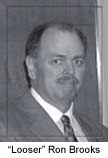
Their Spring Newsletter (pdf) has a cover filled with images invoking 911 and the teaser: “Illicit Drugs vs. National Security. Page 4.” Page 4 is a remarkably ignorant screed and call to action by the organization’s president, Ron Brooks. He lists practically every bad side effect of drug prohibition as a reason for more money for drug prohibition, and even claims “that drug use weakens this great nation’s ability to defend against terrorism.” I’m not sure, but I think he means that America is too stoned to stand up to terrorists, so we need to divert terrorism-fighting resources and budgets over to arresting pot smokers.
A picture named ronbrooks2.jpg

And it clearly is a mission that
deserves adequate federal funding and the unwavering support of
every American, including those in Washington.
I would urge all NNOAC members to realize that this attack on
law enforcement funding and the growing movement to legalize
drugs is a battle that we are currently loosing [sic]. The only way that
we will be successful is for us to all remain organized, focused and
educated on drug policy issues so that we can challenge our nation’s
leaders to continue their support for drug law enforcement.
This is not a battle that we can give up without a fight, nor is it
a battle that we can afford to loose [sic].

Of course, it’s fun to ridicule an ignoramus like Ron Brooks. But the sad part of it is, he’s got a chance of success. He, and others like him, will play the national security card to convince our pork-crazed Congress to give them more money so they can continue to terrorize the American public. And we’ll get to pay for our own torture.

Posted in Uncategorized | Comments Off on Narcs scramble for loose change from terrorist victims

Don’t Mind If I Take a Look, Do Ya?

Scott at Grits for Breakfast has been covering the racial profiling report from the Texas Criminal Justice Coalition.
The results are interesting in a number of ways — clearly there is some racial profiling going on in Texas, but as Scott notes, there’s also one heck of a lot of searching going on, regardless of race.
Take San Antonio. Of those stopped in traffic stops, 26.7% of blacks, 20% of hispanics, and 9.3% of whites have their car searched. And of those searches, 14-18% actually turn out to have contraband of some kind.
That’s a lot of innocent searches. Not the way I envision the intent of the 4th Amendment. That’s more like going fishing with a net — if we search enough cars, eventually we’ll find something. Personally, I think if you can’t have an 80% success rate or better, then you’re casting too wide a net. You’d think 50% at a minimum. But 18%? Any other job, you get fired for that kind of inefficiency.
Interesting report. Hope they continue to collect the information and get better, more complete information (I would have liked to see more actual numbers rather than just percents and rates). I also hope they follow through with this recommendation:

Consent searches contribute significanly to racial disparities and cannot be easily explained by legitimate factors such as probably cause or existing warrants. The Texas Legislature should ban consent searches and only allow searches when there is a legal basis.
Posted in Uncategorized | Comments Off on Don’t Mind If I Take a Look, Do Ya?

Daily Kos and the Drug War

Regular readers of this blog know that I come down very hard on the current administration (and properly so). They’ve got the ball right now and they’re responsible for the injustices that are going on in this war against the people. However, I’m also harsh when I find drug war cheerleaders on any point in the political spectrum. In general, I find that informed individuals on both the left and the right are in favor of reform. Uninformed individuals (particularly those who still mistakenly believe that laws are an effective way to reduce drug use), and those politicians too corrupted by power, are more likely to favor the drug war.
I’m continually amazed and disturbed at how much the drug war is ignored by the main liberal blogs. It’s bad enough that the Democratic Party Platform ignores the vast numbers of victims of our policies. This is almost to be expected. But why the blogs?
Along with dozens of other sites, I visit Daily Kos regularly (although I admit I haven’t spent the time to figure out the entire community structure and rarely venture beyond the main page). The drug war almost never shows up, and when it does, it’s not unusual to find ignorant comments like this one:

If it ain’t gay marriage that will kill us, it’s pro-dope

Come on, people. æIf we are the party of fag loving, dope smoking, military hating hippies, we are in permanent minority status.

-dataguy

or this one

Who cares?

Seriously.

I want to let you in on a secret.

Being Anti-drug use is a bipartisan position.

Leave this shit to NORML to advocate for, we’ve got more important things to worry about.

– Steve4Clark

The sad thing is that both of these were in response to a story about medical marijuana, and so I ask them as I must…

Why do you want to throw sick people in jail for following the advice of their doctor?

As to that “minority status,” dataguy, let me give one possible explanation…
In 1986, Public Law 99-570 passed overwhelmingly without committee hearings, with 301 co-sponsors, including pretty much all of the Democratic leadership. You see, a basketball player had just died of a drug overdose and our representatives were tripping over each other to eagerly demonstrate that they were “tough on drugs.” One of the provisions in this bill was to create a 100 to 1 threshold between powder and crack cocaine. In other words 1/100th of the amount of crack would get the same penalty as the immensely larger quantity of powder. An interesting little note. Blacks tended to prefer crack. Whites tended to prefer powder.
Partly because of this law (and other racist elements of the drug war), we started putting blacks away for drug offenses in record numbers.
In fact, in large part due to the drug war, over 1 in 20 black men of voting age in the country is in a state or federal prison. This is also true in Florida. Now consider the list of ex-felons in Florida who were removed from the voting rolls in 2000 (about 20,000 of whom were black), along with those still in jail simply because they did the wrong kind of cocaine. Consider that blacks in Florida voted overwhelmingly Democrat.
How did that election turn out in 2000, dataguy?
Those on the left have time and time again shot themselves in the foot over the drug war. This is due in part to not having all the facts, but often from fear. Fear of appearing weak.
“We’re just as tough on drugs and crime as the Republicans are,” they say. “We’re passing even tougher laws and harsher sentences. No one can accuse us of being soft on drugs.”
The problem is that until you learn to get “smart” on drugs, you will be promoting and encouraging a corrupt, racist war that fuels a violent criminal black-market. It’s not just about hippies wanting to smoke pot, and it’s time you learned that.
I know that I’m coming down on a whole lot of the Kos community for what is primarily a sin of omission, but forgive me when it seems to the casual observer that you wouldn’t have much of a drug policy reform presence on the front page if it wasn’t for comments from Ben Masel. However, thanks to a note today from nephalim, I discovered there is a tiny drug policy reform presence hidden further within the community — mostly due to nephalim’s extensive pieces on drug prohibition history and heroin/opiate addiction treatment.
And now, finally, there is a Drug War page in the dKosopedia. Horribly anemic, but it’s there.
So I have a challenge for Drug WarRant readers who are on the left.

  1. Go to nephalim’s recent request for collaboration and see if you can help him out.
  2. Get involved in Daily Kos and get the drug war into their consciousness. Educate, inform, and elevate to the front page.
Posted in Uncategorized | Comments Off on Daily Kos and the Drug War

Too true…

Via Grassroots Buzz:

Bill O’Rights Arrested On Drug Charges

Posted in Uncategorized | Comments Off on Too true…