
Another must-read article

The U.S. drug prohibitionists are now reeling from a 1-2-3 punch.
1. We start the salvo by hitting the DEA in the Washington Post and elsewhere by tying prohibition with failure and a profitable black market.
2. Afghan opium hits record levels and the drug warriors have no answer.
3. Now there’s Colombia’s Coca Survives U.S. Plan to Uproot It by Juan Forero in the New York Times. Powerful.

The latest chapter in America’s long war on drugs — a six-year, $4.7 billion effort to slash Colombia’s coca crop — has left the price, quality and availability of cocaine on American streets virtually unchanged.
The effort, begun in 2000 and known as Plan Colombia, had a specific goal of halving this country’s coca crop in five years. That has not happened. Instead, drug policy experts say, coca, the essential ingredient for cocaine, has been redistributed to smaller and harder-to-reach plots, adding to the cost and difficulty of the drug war. […]
* As much coca is cultivated today in Colombia as was grown at the start of the large-scale aerial fumigation effort in 2000, according to State Department figures.
* Colombia, Peru and Bolivia, the leading sources of coca and cocaine, produce more than enough cocaine to satisfy world demand, and possibly as much as in the mid-1990’s, the United Nations says.
* In the United States, the government’s tracking over the past quarter century shows that the price of cocaine has tumbled and that purity remains high, signs that the drug is as available as ever. […]
The lingering question is whether America’s drug problem would be worse today had the drug war, nearly 40 years in the making, never been waged. That may be unanswerable.
What is clear is that the war on drugs, the original open-ended war against an elusive and ill-defined enemy, has moved inexorably onward, propelled by decades of mostly unflagging political support on both sides of the Congressional aisle.
Jon Caulkins, a drug policy expert at Carnegie Mellon University, echoing other analysts, estimates that the drug war has cost American taxpayers upward of $40 billion annually in recent years, though there is no comprehensive government tally of all its state and federal spending. […]
“The spray program has itself increased the difficulty of carrying out the spray program,” said John Walsh, who tracks American drug policy for the Washington Office on Latin America, a nonprofit research and human rights group. “And as a result it becomes less efficient and it becomes more costly to accomplish the same thing.”
“The bang for the buck that people are expecting hasn’t materialized,” he added.

This is a major article in the Times and has to be demoralizing to the drug warriors.
And did you notice? The question was asked.
It was fleeting and in passing and wasn’t discussed, but it was asked.

The lingering question is whether America’s drug problem would be worse today had the drug war, nearly 40 years in the making, never been waged. That may be unanswerable.

Several years ago, a paragraph like that in a major media outlet would be unthinkable. Actually questioning whether the entire decades long drug war, with all the costs in dollars and lives, may have been… for nothing!
Not just in balance, but in its totality.
And the unspoken implication of that question is that if you can think that, what’s to stop you from wondering if the drug problem might have been less had the drug war never been waged?
This is big stuff. Who knows? Before long, this society might actually reach the point where it is acceptable to mention alternatives to the drug war.
Won’t that be something.
Update: This article in the New York Times was also published in dozens of other papers around the country at the same time, giving it some real visibility. And then UPI reported briefly on the topic with the headline of their article: Report: U.S. coca erradication has failed. Ouch. I can’t wait to see that one enlarged to poster size and presented on the floor of Congress the next time Colombian eradication funding comes up for a vote.
Posted in Uncategorized | Comments Off on Another must-read article

Drug War Chronicle talks about us

A nice feature in today’s Drug War Chronicle:
SSDP, Drug War Rant Blog Score Media Hit With Attack on DEA Drug-Terror Exhibit.

Posted in Uncategorized | Comments Off on Drug War Chronicle talks about us

I sent a letter

For those who can’t get enough of the Museum of Science and Industry saga and have nothing better to do — here’s a nice long letter (pdf) I wrote to the legal counsel of the Chicago Park District (which owns and regulates the museum) on Tuesday.
I’m taking bets in comments on how soon they respond and the essence of their response.

Posted in Uncategorized | Comments Off on I sent a letter

And now for something completely different — a nice cup of tea

I’ve never gone the advertising route on this site, so my first impulse was to discard the email I got today. But then I thought about it and realized I kind of liked the idea. Product placement on Drug WarRant!
You see, Kasora (a seller of special reserve teas) contacted me and said if I mentioned them on my blog, they’d send me a gift.
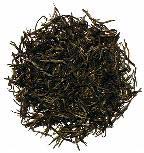
A picture named Kasora.jpgNow if it was one of those spam products, I wouldn’t even consider it, but as I started looking at the Darjeeling Makaibari Silver Tips, Yin Hao Silver Tips Reserve, and the Stone Blossom Bi Luo Chun on Kasora’s site, I got really interested. Even though I’m primarily a coffee drinker, I’ve always loved good tea, and this stuff looks like the sinsemilla of tea.
And Kasora did say they’d send me a gift (but they didn’t say what — I hope it’s tea.)
Now if I could get some of the companies that sell soft hemp seeds and hemp bars to do the same thing…

Posted in Uncategorized | Comments Off on And now for something completely different — a nice cup of tea

It just keeps getting more embarrassing every day…

Afghan opium cultivation hits a record

Opium cultivation in Afghanistan has hit record levels — up by more than 40 percent from 2005 — despite hundreds of millions in counternarcotics money, Western officials told The Associated Press. […]
Gen. Khodaidad, a top official at the ministry, said virtually all cultivated land in Helmand — including government-owned land — has been planted with opium poppies.

Wait, isn’t the drug-war-fighting-leader-of-the-world United States supposed to be in charge over there? I’m sure of it. I remember — At least, I think I remember… I’m pretty sure we dropped bombs and stuff and we sent troops and we nailed Osama and al Qaeda and eliminated the Taliban, or something, and we were greeted as liberators and the grateful people planted coffee and bananas. Or did I dream that?
In actuality, the United States met an enemy it can’t defeat. No amount of might wielded by the Pentagon can destroy it. No bombs, no planes, no troops can win against this enemy.
No, I’m not talking about Al Qaeda. I’m talking about the economic law of supply and demand.
The drug warriors keep acting like they can defy economic laws — that their pathetic little attempts to eradicate, prohibit, seize and imprison the world will somehow create an alternate universe, where people don’t do drugs and farmers don’t care about growing crops that will actually feed their family, and criminals turn down the opportunity to become fabulously rich.
And they can’t understand why it doesn’t work.
Rumsfeld is trying to deny responsibility for Afghanistan, and Walters is just plain stupid:

But Mr Walters today said that eradicating the opium crop was the only way for Afghanistan to achieve lasting peace.

Prohibition is a delusion implemented by morons.

[Thanks, Daksya]
Posted in Uncategorized | Comments Off on It just keeps getting more embarrassing every day…

Open Thread and Interesting Reading

“bullet” Reefer Gladness, in which Philadelphia City Paper’s Brian Hickey discovers (and falls in love with) Law Enforcement Against Prohibition.

I realized this LEAP thing can’t be as easily dismissed as a bunch of hacky-sack-circling, NORML-pamphlet-pushing hippies from Swarthmore. By day’s end, one former judge and two former cops (all local) shared the same convincing message: It’s time to cut our mounting losses and run from the failed War on Drugs.

He’s right, of course. So go to LEAP’s site and find out how you can get them invited to speak to your local rotary club.
“bullet” Club Pot Med by Philip Dawdy in the Seattle Weekly is a fascinating exploration of the challenges of medical marijuana in a confusing and undefined legal structure.

The law has driven the supply system underground, pot patients are getting busted, and some cops, prosecutors, and judges just don’t get it.

Of course, there’s a real workable answer to all of this confusion. Legalize. Just like they’re trying to do in Nevada (give them a hand) — an effort which has gained some real conservative support

Posted in Uncategorized | Comments Off on Open Thread and Interesting Reading

Prohibition – Destroying our natural resources

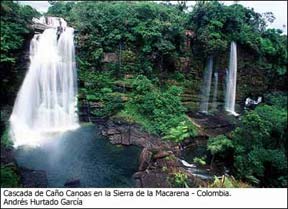
Say goodbye to Sierra de la Macarena.

A picture named sierra_macarena.jpg

Here’s how you lose a forest…

  1. Defying immutable economic laws, governments prohibit a popular drug, making the illegal production and distribution obscenely profitable.
  2. Government compounds the problem by attempting to go after the drug at the supply source through eradication, creating a narco-state, where all power structures and political finances depend on either the drug or eradication dollars supplied by the U.S.
  3. When eradication efforts intensify, traffickers move to less accessible areas, including clearing rainforests, to grow the plant that’s used to produce the drug.
  4. Environmentalists complain of the destructiveness of the spraying, so the government tries manual eradication in the national forests, but the traffickers blow up the workers to protect their prohibition-fueled profits.
  5. So the Government sprays, destroying the forest to save it. All because prohibition doesn’t work.

U.S.-supplied planes spray coca at Colombian park, amid doubts over strategy

Colombian authorities have for the first time used U.S.-supplied planes to spray a pristine national park used by leftist rebels to grow coca — the raw ingredient for cocaine — despite environmental concerns.
Anti-narcotics police chemically fumigated the Sierra Macarena national park — 170 kilometers (105 miles) south of the capital of Bogota — last week, clearing its entire 4,600 hectares (11,370 acres) of coca. […]
The “world will have to understand that we must fumigate,” he said.
Uribe said he wants to double aerial spraying, and his top military advisers want to expand the practice to the 11 other parks known to have coca.
“It’s the most efficient way to do our job,” Gen. Jorge Baron, head of the anti-narcotic police, told The Associated Press.
In addition to those killed by the bomb, 26 workers, soldiers, and police guards have been killed at the Sierra Macarena park since December, when the government launched a manual eradication drive there involving 3,000 troops — its biggest ever. Some 200 other workers quit, fearing for their lives.
Washington has long urged Uribe to extend spraying to parks and provided the glyphosate herbicide, as well as Black Hawk helicopters used for protection, during the missions. […]
“Those who think fumigating La Macarena, and perhaps other parks, will wipe out coca production are wrong,” the normally pro-government newspaper El Tiempo said last week. “Instead, there will be more coca, and less park, as rebels destroy more forests, deeper inside the park, to continue planting.”
The editorial echoed the belief of a growing number of Colombians and key U.S. Congress members that aerial spraying — a cornerstone of the drug war — is failing.

Failing? It was a doomed approach from the beginning — part of the larger prohibition debacle that is empirically nonviable.

Posted in Uncategorized | Comments Off on Prohibition – Destroying our natural resources

A Day At the Museum

A picture named me.jpgA number of people have wanted to know how the passing out of flyers went at the museum on Friday. So I’ve got a little story to tell. And you’ll learn…

– That the museum personnel know very little about the constitutional right of free speech.
– That if you pay $12 to park, and then pay $11 for a ticket to see the exhibit, and then ask some very cordial and polite questions of museum personnel, a Vice President will come and personally threaten to have you removed from the premises.
– There’s also a map with colorful shading.

Posted in Uncategorized | Comments Off on A Day At the Museum

Welcome, Congress

In today’s Congressional Quarterly (sorry, no link – subscription only)
Drug Dissenters Make Terror Link by Shawn Zeller, CQ Staff

For the five years since the Sept. 11 attacks, federal drug warriors have publicized the ways that ill-gotten narcotics profits have paid for terrorist activity. Now the critics of the drug war are seeking to turn that argument to their own advantage, suggesting that drugs are attractive funding sources to terror groups for one main reason: because they’re illegal. […]
Just as Capone profiteered using the illegal status of alcohol during Prohibition, Angell argues, terror groups are able to realize enormous profits because of the artificially high prices of illicit drugs today. The exhibit’s DEA sponsors are “hiding the fact that it is their prohibitionist policy that has allowed terrorists to make money off drugs,” he says. He says his group plans to dispatch members to the exhibit throughout its four-month run to distribute leaflets promoting a rival online exhibit created by Pete Guither, who writes the blog DrugWarRant.com.

(And that rival online exhibit is DEAtargetsAmerica.com)
The best thing in the article is how the DEA spokesman obliviously steps right into it.

DEA spokesman David Ausiello says that, while the exhibit does make use of such specific cases [terrorist drug connections], its primary message is much broader: “We are up against a formidable enemy that is well-funded with money that comes from drugs,” he says. “We have to take away their means to make money.”

Yep. And there’s one way to do that. End prohibition, and the criminals lose their source of funding. (Of course, so does the DEA.)
Thanks for helping us make our point, David.

Posted in Uncategorized | Comments Off on Welcome, Congress

The DEA Exhibit — your turn

We’ve had a good start with our response to the DEA exhibit at the Museum of Science and Industry. I know a lot of you wanted to do something to help, but aren’t available to pass out flyers.
Here’s your chance.
The exhibit has generated some press, and you can capitalize on that by writing letters to the papers and the sponsors.
Here are some talking points.

  • Parallels between alcohol prohibition and prohibition today.
  • The inappropriateness of using a museum exhibit to act as a commercial for a federal agency.
  • The DEA’s failed record.
  • It’s a one-sided exhibit, and it’s political propaganda.
  • The drug and terror connection being promoted in the exhibit is a blatant attempt by the DEA to step up to the terror funding trough, and it ignores prohibition’s impact on the obscene profitability of the illicit drug trade.

MAPinc is a great source for letter-writing tips.
Here are some papers that have published articles on the exhibit.

A few more sponsors…

Note about sponsors: There appears to be some confusion as to the actual list of sponsors for the exhibit. I got the list on the right side of this page directly from the DEA Museum’s site (which had been updated as of July 27). However, their site now has this shorter list as of May 1 and an even shorter list as of January 15. The museum’s exhibit site only lists two sponsors – McDonald’s and NBC 5.
So write some letters. It only takes a few minutes. And it’s your turn.

Posted in Uncategorized | Comments Off on The DEA Exhibit — your turn