
- DrugWarRant.com, the longest running single-issue blog devoted to drug policy
Join us on Pete's couch.
 Send comments, tips,
and suggestions to: LSD is stripped down to the base features responsible for its hallucinogenic and therapeutic effects: 7-Sep-2026 – In a study…
NIDA research to determine if psilocybin can be used to treat cocaine addictions: 4-Sep-2026 -- Albert Arias, MD, chief of…
Cannabis marketers may promote marijuana in connection with intimacy: 1-Sep-2026 – PULLMAN, Wash. – Alcohol advertisers have long faced industry…
Psilocybin offsets chemotherapy-induced peripheral neuropathy (CIPN): 3-Sep-2026 -- A psychedelic compound best known for its effects on the brain may…
Another violent drug raid, more dead dogs. This time it’s the mayor.
Posted in Uncategorized
Comments Off on Another violent drug raid, more dead dogs. This time it’s the mayor.
Congressmen call for federal decrim of marijuana, scaring drug warriors into strange behavior
Nick Juliano at Raw Story has great coverage of today’s press conference with Rep. Barney Frank, who is introducing a marijuana federal decriminalization bill (not expected to pass, but intended to open a dialogue).
The ONDCP apparently sent their big guns to immediately try to rebut, well, something else entirely.
ONDCP’s Dr. David Murray’s impassioned arguments that seemed more appropriate in Reefer Madness were greeted with plenty of puzzled glances.
Why did the White House feel it necessary to send at least three staffers to Capitol Hill to place in every reporter’s hand a copy of its 20-page, color-copied “2008 Marijuana Sourcebook?” RAW STORY posed this question to Murray.
“It is our responsibility to be aware of policy developments,” said Murray, who clarified that he had a PhD and was not a medical doctor.
Ah, so that is why the ONDCP rushed this bizarre 2008 Marijuana Sourcebook (pdf) to press (subtitled: Marijuana: The Greatest Cause of Illegal Drug Abuse).
The ONDCP is close to becoming its own worst enemy.
Here’s some footage from the actual press conference.
Posted in Uncategorized
Comments Off on Congressmen call for federal decrim of marijuana, scaring drug warriors into strange behavior
Drug war doesn’t work? Who’d’a thunk it?
The BBC reports:
The UK Drug Policy Commission said despite the large sums of money spent tackling the problem, traditional police tactics were not working.
Uh, yep.
Tim McSweeney, one of the report’s authors, said: “We were struck by just how little evidence there is to show that the hundreds of millions of pounds spent on UK enforcement each year has made a sustainable impact.”
Former police chief constable David Blakey, of the UK Drug Policy Commission, said enforcement agencies tended to be judged by the amount they had managed to capture.
“This is a pity as it is very difficult to show that increasing drug seizures actually leads to less drug-related harm,” he added. […]
Brian Paddick, a former deputy assistant commissioner of the Metropolitan Police, told Today part of the problem was the performance targets set for police forces.
“There is no incentive at the moment for chief constables to tackle drug crime. All the performance indicators against which police forces are measured are based on reduction of acquisitive crime.”
This is actually pretty impressive to hear in major media outlet. And the Drug Policy Commission report has some useful data.
Of course, we already know this. It’s been obvious as the hand in front of your face (although the drug warriors won’t acknowledge it).
It’s very nice to hear them talk about the fact that police are using the wrong benchmarks for determining effectiveness. Number of arrests and number of seizures really means nothing. That’s something we need to be better at doing — pressuring for a different kind of accountability (although it won’t be easy).
The UK study went even further:
It went so far as to warn that police operations could have a negative effect on the problem.
They could threaten public safety and health by “altering the drug users’ behaviour and potentiallyá setting up violent drug gang conflicts as police move dealers from one area to another”, said our correspondent.
Exactly.
So how does the government respond to that?
A Home Office spokesperson said: “The government agrees that enforcement in isolation is not effective.”
Translation: We’ll keep doing it anyway, but by claiming (as we have been all along) that we’re doing it in conjunction with other efforts, it’ll magically make it all better, without us having to actually do anything about our failure.
(We here the same kind of thing from the ONDCP sometimes — usually they say that they’re working on a “balanced” program of enforcement and other methods.)
Wait. Wait. Yes, here it is, later in the article…
The Home Office said seizures were only part of the government’s approach, with intervention programmes getting 1,000 offenders into drug treatment each week.
“Many of the report’s recommendations are already being implemented,” the spokesperson added.
“Our drugs strategy encompasses enforcement, prevention, education and treatment.”
Ah, I feel so much better. They’re not just spending millions of pounds on a dangerous policy that doesn’t work and has negative consequences, but they’re doing other things as well. That makes it all good.
Posted in Uncategorized
Comments Off on Drug war doesn’t work? Who’d’a thunk it?
Trials

“bullet” Today is the beginning of the trial of Sgt. Joseph Chevalia for shooting and killing 26-year-old Tarika Wilson in a botched drug raid. An all-white jury will consider the misdemeanor charges.
I hope he gets a fair trial.
Unfortunately, there are others who should be on trial as well — who are perhaps even more culpable. Those who made the decisions to use this kind of tactic in the drug war. They are as much responsible for Tarika’s death, but walk around free to make the same tragic decision over and over again.
Unfortunately, it’s more likely that the culpability will be deflected.

“bullet” A grand jury is hearing evidence this week regarding the killers of Rachel Hoffman. The judge has sealed pre-trial evidence, and there is some concern that he may be gagging Rachel’s parents from agitating about the botched police procedures.
I’m sure you recall, but Rachel is the 23-year-old girl who sold some pot to friends (caught with a quarter ounce pound and 6 pills) and was coerced (without her attorney’s knowledge) into acting as an informant in a horribly conceived police operation where she was to buy cocaine, 1,500 ecstasy pills, and a gun. The criminals smelled the obvious set-up and killed her.
ABC’s 20/20 did a feature on Rachel — her tragic story is getting a lot of national coverage, and will do a lot to shed light on this despicable drug-war tactic.
“bullet” The trial of Charles Lynch is underway in Los Angeles federal court.
Lynch was a major drug dealer, who sold millions of dollars of drugs to thousands of people — many of them under the age of 21. Yes, this is a dangerous criminal. At least, that’s what the jury will hear.
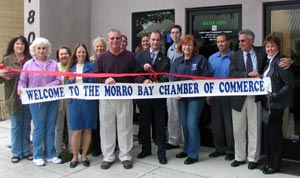
But in fact, Lynch was welcomed with open arms by the Chamber of Commerce when he opened his state-authorized medical marijuana facility called Central Coast Compassionate Caregivers. And he sold medical marijuana to patients with doctor’s recommendations, including selling it to special young people like 17-year-old Owen Beck — an athlete who had his leg amputated because of bone cancer and who used marijuana to control the phantom pain at the urging of his parents and his doctor. Sometimes Charles Lynch gave it to Beck for free because he cared. (If you haven’t seen Drew Carey’s video on this, you really should.)
But you see, this trial is taking place in a federal court, and Congress has defined marijuana as not having medical use (and the DEA, for very selfish reasons, won’t change it either). Therefore, the mere fact that marijuana can be used for medical purposes cannot be brought up in a federal trial. Period. Which makes Charles Lynch’s ability to defend himself extremely difficult, and creates the bizarre situation where all sorts of hoops are created to keep the jury from learning the truth (is that the American way, or what?)
I think it may be hard to keep the cat in the bag in this trial, and it could get contentious. I wonder what the jury will think and if they’ll figure it out on their own, even without the spoken defense (of course, all those potential jurors sympathetic to medical marijuana and jury nullification were undoubtably removed).
As an interesting side note, Carl Olsen, of Iowans for Medical Marijuana, who has filed a new petition to re-schedule marijuana out of Schedule 1, has filed a motion to appear as amicus curiae in the Lynch trial under the claim that the DEA is “in violation of federal law for failing to perform its duty to administer the schedules of controlled substances.”
…
Three trials. Three different reasons to be outraged. One clear verdict.
Drug War: Guilty
Posted in Uncategorized
1 Comment
It’s been an amazing Five Years
I started Drug WarRant on Sunday, July 27, 2003 with a post about the Hinchey Amendment. I thought maybe I’d post once a week or so — mostly for myself, but if anyone happened to stop by… I discovered there was way too much to talk about, and people eager to read. In five years, there have been over 2900 posts and 2.6 million page views on this blog.
Boy, have I learned a lot! There’s no way to conscientiously write a single-issue blog for five years without coming away with an incredible amount of information about the subject. Through newsreaders, I track hundreds of articles and posts from around the world. I read Supreme Court decisions and scientific studies. Readers send me tips and newsmakers and policy leaders often engage me personally in support or dispute.
My own views have evolved somewhat over time because of that increased knowledge. When I started, I knew that the drug war had serious problems and that marijuana should be legalized, but I had not yet learned that criminal drug prohibition of any kind, as a concept, was provably unsalvageable.
I also had to learn the extent to which I had been lied to by the government and the media — some intentional, some unwitting. It takes time to sort through the clutter of propaganda to find the truth.
It’s been an exciting and frustrating five years. I sometimes forget what I had to go through to learn what I know, and I’m frustrated that so much of the general public can’t immediately shrug off decades of accumulated propaganda in order to embrace reform. I find myself wondering why simply telling them the truth in a clear, reasoned, and factually supported way isn’t enough. But then I remember that deprogramming is a process.
Certainly, I wish we had made more progress over the years. It is depressing to realize that the 6th Hinchey Amendment is in the works and very little progress has been made in Congress.
And yet, we have done remarkable things. The drug warriors are getting desperate, and are lashing out wildly, making their own situation worse, as the public begins to see their deficiencies and lies. The ONDCP and DEA have even gone so far as to respond to their opponents, and the head of the UNODC attended an international drug policy reform convention, We can no longer be dismissed as druggie hippies. Attention must be paid.
The wonderful addition of LEAP to the movement and the ascendancy of SSDP also had powerful impact, and drug policy reform is being seen everywhere. While much of the media, including the news services, are still willing to pass on the government line, they now often add an opposing voice. OpEds and editorials all over the place are daring to speak our “L” word and the drug warriors are getting bashed right and left.
In the last five years, the U.S. government has shown signs that it may be losing its power to impose its drug war on the rest of the globe, and more countries are daring to resist.
We absolutely own the internet.
The few pathetic attempts on the part of prohibitionists to create an internet presence have been met almost uniformly with ridicule, and to this day, I know of no pro-drug-war site that allows publicly displayed comments. But we’re everywhere — and not just drug policy reform sites and their blogs, but also libertarian, liberal and conservative sites, criminal justice sites, and more.
And it’s not just the sites, but all the residents of our online communities who write letters to the editor, comment on online fora, and even comment here at Drug WarRant. I know I couldn’t do what I do without you — not only because of the tips, corrections and feedback I get, but because the comments you leave on my blog provides much of the motivational fuel to keep it going.
So a huge thanks to all my readers, and especially those who stop by in the comments. It means a lot.
There have been a few notable accomplishments here at Drug WarRant in this half-decade. I took down Andrea Barthwell (not once, but twice) and took on the DEA’s Museum exhibits (also see articles in the Washington Post and the Chicago Tribune) and their Vigil for Lost Promise. I provided useful resource pages for the Raich and Bong Hits 4 Jesus Supreme Court cases. The most popular page on my site continues to be Why is Marijuana Illegal (which is used as a resource for tons of High School and College papers), followed by Drug War Victims. Recent pages that have generated a lot of interest include Deep Thoughts About the Drug War and The Drug Czar is Required by Law to Lie.
The current head of the DEA, Michele Leonhart, can’t enter her own name in Google without getting my article about her (same thing is true with former DEA head Karen P Tandy).
Five years. Navel gazing time. Is five years enough? It’s a really long time to blog. Should I hang it up?
Uh. Nope. The simple fact is that I cannot at this time stop knowing what I know and getting upset about the fact that the drug war still rages.
So I’ll continue finding time late at night and in between my job and all my other passions to have a conversation with you about drug policy reform.
Obviously, I don’t do this for the money. I do it because I must. Fortunately, the Google ads cover my out-of-pocket expenses for the blog itself. And I don’t need to get paid for my writing/reporting. However, I do like stuff. So while I certainly don’t want a cent from anyone who is on a tight budget, if you feel like you’ve found Drug WarRant valuable to you and desire to express your appreciation in more than words (which are always welcome), you can drop by my wish list or help me buy me some coffee.
Thanks for a great five years. Who knows — someday we may just be able to make this blog obsolete.
Update: Thanks for all the wonderful comments! You made my day.
Posted in Uncategorized
Comments Off on It’s been an amazing Five Years
An interview with Scott Burns
There’s a fascinating interview with deputy drug czar Burns in The Arcata Eye. I believe the interview was conducted by Kevin Hoover.
The Arcata Eye is certainly not known for is support of the drug war, yet Burns agreed to a 25 minute interview in conjunction with some publicity-seeking busts. Hoover did a masterful job for the most part, starting off the interview as a standard media interview, but then gradually increasing the stakes. Burns was forced to scramble to keep up, thereby leaving some rather gaping holes in his answers.
Bruce Mirken at MPP blog has identified a couple of blatant lies by Burns in the interview, but those are by no means the only ones.
Some low-lights:
Eye: Do we know that? Is there enough research to indicate that it has no medical efficacy? I can bring you chemotherapy patients who would tell you that it is the only thing that suppresses their nausea and gives them an appetite. So is there nothing to what they‰re saying and feeling?
Burns: I‰m saying that maybe that, the… Anybody can say something makes me feel better anecdotally. And I hear that a lot. ‹Marijuana is the only thing that makes me feel good.Š I say you should try crack, because from what I hear, crack cocaine will make you feel really good as well. This is not about making people feel better, it‰s about as a country and the effects it will have on all of us, all 305 million of us. Because someone tells me that ‹smoking crack cocaine releases my nausea and allows me to have healthier appetite,Š does that mean that we legalize it nationwide, and that its available to kids in a greater number? We have to make those kind of policy decisions. And we ought not make them on people who say, ‹Me personally, it makes me feel better.Š
At one point the Eye mentions the argument that there hasn’t been enough formal study of marijuana as medicine, and Burns replies that there’s no need to study it — the fact that it’s smoked rules it out as serious medicine.
Later, the Eye asks about the Compassionate IND program, where the federal government supplies marijuana to grandfathered patients. Burns thinks he has a chance to score:
Burns: That goes back to the people that said, ‹You know what, we really oughta study that more.Š So we do, and we set up a program, and we give a small number of people marijuana, and I know most of them by name because they show up in every hearing that I go to and say, ‹I‰ve been smoking marijuana for years and the federal government gives me this marijuana.Š Well, that was an attempt to do what the critics said. Why don‰t we study it more?
Except, of course, that the federal government has refused to actually study those patients, because they already know what they’d find out and don’t want that public.
True colors:
Eye: Philosophically… you‰re a Constitutional law teacher, I believe?
Burns: A little bit.
Eye: …and the whole premise of America‰s freedom and self determination. How can we reconcile that with the government telling us what we can ingest and what we can‰t?
Burns: Well, I think, first of all we settled it Appomattox, the fact that we‰re gonna have this thing for the Supremacy Clause, and when push comes to shove we‰ll decide on certain issues who will prevail, the federal government or the state. And on many issues it‰s the states, and for the most part, I think most Americans would agree that it should be that way. But on some issues that affect all of us for the good of the order we have to come to some consensus. And not everybody‰s happy, are they? And every time we don‰t get to do what we want, I know there are states where they really really like to marry young girls, 12, 11, or 10 and they would argue to you, ‹How dare the federal government preclude us from engaging in certain activities?Š Well, in some instances we just say your, quote, ‹constitutional rightsŠ and your freedom to do certain things gets trumped by the rest of us who say, ‹You know that‰s just not a good idea.Š
Nothing like putting scare quotes around “constitutional rights” to make it clear what kind of American you are.
Posted in Uncategorized
Comments Off on An interview with Scott Burns
Taxpayer funded propaganda so outrageous even the DEA objects
Article by Ray Stern
Did you know that 90% of drugs comes from south of the border? Neither did the DEA.
So where did Maricopa County Attorney Andrew Thomas get his “facts”?
Robert Caldwell, who has a history of uninformed nonsense.
Posted in Uncategorized
Comments Off on Taxpayer funded propaganda so outrageous even the DEA objects
That hamster only has three legs
Maybe I’m an intellectual elitist, but sometimes I forget that they don’t require any literacy or intelligence tests to get on the internet tubes, and when reading some commenters on public fora, I find myself physically staggering from the sheer enormity of the black hole that sits right where their comprehension should be.
At these times, I can actually see the ponderous rusted hamster wheel turning askew in their heads generating a thought process that goes something like this:
Drugs=Bad. Legalization=Drugs. Therefore, Legalization=Bad. You support Legalization. You=Bad. Why do you want to do bad things to children?
Posted in Uncategorized
Comments Off on That hamster only has three legs
Must Read
Former Baltimore City police officer Peter Moskos in U.S. News and World Report today: Drugs Are Too Dangerous Not to RegulateÖWe Should Legalize Them
It’s a great piece with the right focus for a major national magazine.
On the other hand, the magazine is doing a point/counter-point on this and the other side is taken by former drug czar Lee P. Brown, who starts with the most inane, brain-dead statement imaginable.
Advocates of legalization argue that drug prohibition only makes things worse. They argue that crime, the spread of HIV, and violence are major consequences of drug prohibition. But these represent only part of the damage caused by drug use. Consider drug-exposed infants, drug-induced accidents, and loss of productivity and employment, not to mention the breakdown of families and the degeneration of drug-inflicted neighborhoods. These too are consequences of drugs.
Does he realize how stupid that is? Does he expect that the population is stupid enough to believe that paragraph makes any rational sense? Is he insulting our intelligence, or is his own simply that far gone?
Posted in Uncategorized
Comments Off on Must Read
Open Thread
“bullet” Misha Glenny: A dangerous fiction
The time has come to shout from every rooftop that the war on drugs hands billions of pounds on a plate to criminal syndicates and terrorist organisations every year. Senior policymakers, police commanders and politicians have all told me in private that the war on drugs does nothing to halt the flow of product to market. But they are all too frightened to speak out against the prevailing orthodoxy.
“bullet” Thanks to Daksya for the link to this 7 page whine by Thomas Schweich (former State Department coordinator of counternarcotics) in the New York Times: Is Afghanistan a Narco-State?. The thing is, I don’t doubt the accuracy of much of what he says, but the only reality he can see is drug war. His five-point plan at the end of the article is quite frankly, absurd.
- Inform President Karzai that he must stop protecting drug lords and narco-farmers or he will lose U.S. support. Karzai should issue a new decree of zero tolerance for poppy cultivation during the coming growing season. He should order farmers to plant wheat, and guarantee today‰s high wheat prices. Karzai must simultaneously authorize aggressive force-protected manual and aerial eradication of poppies in Helmand and Kandahar Provinces for those farmers who do not plant legal crops.
- Order the Pentagon to support this strategy. Position allied and Afghan troops in places that create security pockets so that Afghan counternarcotics police can arrest powerful drug lords. Enable force-protected eradication with the Afghan-set goal of eradicating 50,000 hectares as the benchmark.
- Increase the number of D.E.A. agents in Kabul and assist the Afghan attorney general in prosecuting key traffickers and corrupt government officials from all ethnic groups, including southern Pashtuns.
- Get new development projects quickly to the provinces that become poppy-free or stay poppy free. The north should see significant rewards for its successful anticultivation efforts. Do not, however, provide cash to farmers for eradication.
- Ask the allies either to help in this effort or stand down and let us do the job.
Update: See Barnett Rubin at Informed Comment: Global Affairs for a good critique: Assume the Existence of a State in Afghanistan
“bullet” Tousawlaw catches Margaret Wente answering questions about her propaganda series in the Globe and Mail. At one point she says”
Marijuana legalization seems so easy! But it‰s very vexed.Here‰s one part of the problem. If we legalize it, someone is going to make a huge amount of money from promoting and selling it. Who do you want that to be? Private enterprise, like Big Tobacco? Or your government? Do you want your government shilling weed the way it does the lottery?
Tousawlaw notes:
Ummm, someone already is making a huge profit promoting and selling it. Is that who Ms. Wente thinks should be doing so?
“bullet” In Athens, Greece, Anna Korakaki was arrested for ordering hemp protein from a United States health food company and charged with four counts of criminal drug possession.
The day of Anna Korakaki’s arrest, her friends went to a local health food store in Athens to purchase a loaf of sprouted hemp bread (meaning that whole hemp seeds had been imported to Greece, then sprouted and ground for baking). The bread was brought before the judge to demonstrate that hemp foods are available in Greece, which seemed to shock the judge, but made no difference to his thinking towards Anna’s parole.
[Thanks, Tom]
“bullet” Marijuana Polic Project has a blog.
“bullet” “drcnet”
Posted in Uncategorized
Comments Off on Open Thread

Psilocybin protects against nerve damage from chemotherapy: September 3, 2026 -- Chemotherapy is brutal. The cancer treatment is often lifesaving,…