
Well, the Monday release of the medical marijuana non-interference guidelines memo resulted in some pretty good national coverage. It’s been big news all over the media and the internet.
Here’s a brief rundown of some of the more interesting ones…
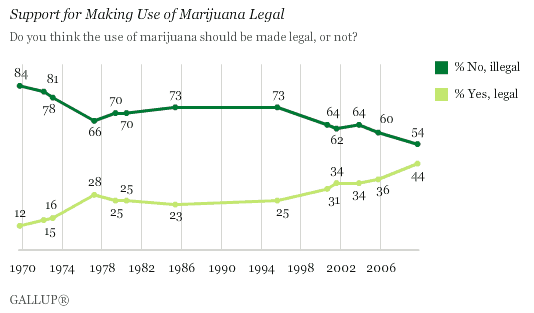
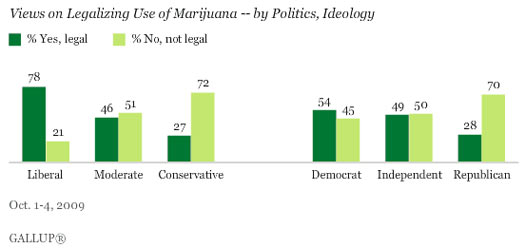
 Marijuana And State Budgets: Now What? — US News and World Report Money uses the memo and the recent Gallup poll to speculate on when states will step up and eye the potential tax revenue.
U.S. Won’t Prosecute in States That Allow Medical Marijuana, in the New York Times, contained this rather ironic reaction to the news.
But one prominent conservative, Representative Lamar Smith of Texas, criticized the Justice Department’s position, saying it would weaken drug enforcement.
“By directing federal law enforcement officers to ignore federal drug laws, the administration is tacitly condoning the use of marijuana in the United States,†said Mr. Smith, the senior Republican on the House Judiciary Committee. “If we want to win the war on drugs, federal prosecutors have a responsibility to investigate and prosecute all medical marijuana dispensaries and not just those that are merely fronts for illegal marijuana distribution.â€
Two notes: Win the war on drugs? Right. And did you notice how he essentially stated that we need to prosecute legal dispensaries (by comparing them to illegal ones)?
Holder’s Baby Step On Medical Marijuana. Chris Weigant isn’t impressed.
What this all means is that today’s news, while good for the medical marijuana movement, is simply not good enough, because it changes no underlying federal law. Meaning that, if President Obama — and Attorney General Holder, and the local Drug Enforcement Agency, and the local federal prosecutor — all deem a particular medical marijuana dispensary acceptable, then it won’t be raided. But if anyone in that chain of command decides you’re outside the state law in any way, then you cannot even mention the words “medical marijuana” in your court case after they arrest you. You will simply be prosecuted as a “dealer” or “trafficker” and will be gagged so you cannot explain who you were really selling marijuana to.
This is still unacceptable. The citizens of fourteen states have determined that medical marijuana should be allowable. At the very least, you should be able to present this defense to a jury in a federal courtroom. Because without this change, all it would take is one D.E.A. office or one federal attorney to take a dislike to your operation, and you won’t even be allowed to adequately defend yourself in court. And even if everyone in that chain of authority behaves themselves for the next four (or eight) years, Obama won’t always be president. Meaning that all it would take is another memo by another attorney general, and the policy will go right back to where it was previously.
Gateway Drug Policy: Will Obama’s new medical marijuana directive actually change anything? by Christopher Beam at Slate
Where the new federal guidelines could have an effect is on states currently considering medical marijuana laws. Right now, 13 states allow some degree of medical marijuana consumption. (There are 14 if you count Maryland, which reduces the penalty if the marijuana you’re caught using is for medical purposes.) Another dozen or so have bills moving through their legislature. In many cases, lawmakers have been skittish about OKing dispensaries for fear that the Drug Enforcement Administration would come and shut them down. Now that’s no longer a concern. […]
Most states take their cues from the federal government on drug policy. The practice traces back to passage of the Controlled Substances Act of 1970, which aimed to create a uniform set of drug regulations across the country. During the drug war in the 1980s and ’90s, the federal government started awarding grants to help states with law enforcement in exchange for aligning their drug policies with federal guidelines. So when the federal government signals its preference not to pursue medical marijuana users, states may take the cue.
A New Course on Medical Marijuana?, also in the New York Times, features reactions to the news from five individuals (two of which are LEAP members!)
Former ONDCP associate director Tom Riley thinks the memo is no big deal and changes nothing.
Joseph D. McNamara, James E. Gierach, and Richard N. Van Wickler generally see it as a somewhat positive step forward but are looking for more.
Former FDA official Henry I. Miller is unsurprised, but falls back on the annoying old whine that we don’t know enough about marijuana, that we need to study it for a couple more centuries and turn it into pharmaceuticals that can profit big pharma before we allow any sick people to feel better.

 Servetus on It isn’t about the drugs.: “Pete Hegseth is being blamed for committing three war crimes, including perfidy in the bombing of boats off the coast…” Jan 14, 20:38