Interview with an author

I’ve started reading a novel with a refreshingly different perspective.
I’ve gotten used to, but still bothered by, the whole notion that the drug war is very popular subject material for fiction (books, movies, etc.). The typical approach is the evil drugs theme, with the good guys going after the drug dealers, and eventually prevailing because they didn’t bother themselves with things like citizen rights. At the end, the bad guys are dead and the community is saved forever from the scourge of drugs. Hooray!
Hey, it’s fiction, so I don’t worry about it too much. But the complete lack of reality, of understanding how the drug war works, of the importance of the Constitution, sometimes gets a little tiring to me.
So I’m really looking forward to this one. “Condemned” by John Nicholas Iannuzzi — a novel by a trial lawyer and adjunct professor of law who explicitly calls for the legalization of drugs.
I’ll write more when I’ve had time to read it (don’t hold me to a time limit — I’ve got a number of projects in the works), but I wanted to share with you this interview with the author that came in the press kit from the publisher. Definitely got me interested in his book!

The Legalization of Drugs: An Interview with John Nicholas Iannuzzi


Q. Do you really think that legalizing drugs will eliminate drug trafficking?
A. Absolutely. You have to realize that there are two very distinct and very separate drug problems in our world. The first, and most pernicious, is drug trafficking. The other is drug addiction. It is the first, trafficking, that causes all the violence, corruption, smuggling, and vast sums of money being made by criminals. This is even more relevant now, being that Al Queda and terrorists in Afghanistan are involved in trafficking. Once legalized, where drugs can be controlled, as is alcohol, in state controlled stores, the vast profits will be eliminated. Without profits, the trafficking will stop overnight. No drug traffickers will bother to smuggle drugs if there shall be no profit. Once the trafficking is stopped, addiction will become a medical problem, treated as alcoholics are today.
Q. Are you in favor of all drugs being legalized?
A. Absolutely, all drugs, across the board. Otherwise, whatever drugs aren’t legalized, shall encourage continued drug trafficking.
Q. Don’t you think that that will lead to more, not less drug abuse.
A. First of all, we don’t know how large our present drug addiction problem is because it has been criminalized; much of it is behind closed doors and underground. Once legal, addicts will come “out of the closet” and can be treated. If they don’t care to be treated, if they don’t care to get help, they can drug themselves privately at home, like a closet drinker. But at least trafficking shall have been eliminated and the addicts’ substance abuse problems shall not endanger the whole of society as they do today.
Q. Where does the name of your novel, Condemned, come from?
A. From a quote from Santayana: “Those who fail to remember the past, are condemned to repeat it.” We are in the midst of repeating what Franklin Roosevelt called the Stupendous Blunder of Prohibition. Laws that were intended to regulate and eliminate an allegedly evil substance, actually created an industry — illegal alcohol — which, in turn, brought forward Al Capone, the Valentine’s Day massacre, illegality, and corruption in the same forms we now have as a result of prohibiting drugs.
Q. Do you really think the government can regulate drugs? How do you see this being done?
A. Absolutely. In the same manner the state governments regulate alcohol.
Q. You mean, you think the states will go into the drug business?
A. No, but they can license stores and outlets on a very strict basis, in the same fashion that they regulate alcohol.
Q. What about pilots in planes? Are you going to allow them to take drugs and then fly?
A. First of all, notice, you have already accepted the fact that legalization will eliminate trafficking, and are now asking questions about addiction. In connection with those questions, you can answer all of them yourself by thinking of how alcohol is sold or controlled. Do we allow pilots to drink and fly? No. Nor drivers of cars. Nor youngsters under the age of 21. However alcohol is regulated, that’s the way drugs will be regulated.
Q. You keep talking about alcohol. Don’t we have a lot of alcoholics?
A. Yes. But we don’t have any rumrunners, or violence, or people worrying that the derelict on the corner is going to mug them to buy a pint of wine. Alcoholics exist. And they can be treated, not as criminals, but as a patients. People won’t have to worry about being mugged or having their homes burglarized so that junkies can buy an expensi ve fix.
Q. So then your concept of eliminating drugs hasn’t accomplished anything?
A. On the contrary. It isn’t the addicts that cause the violence, corruption, the money laundering, the couriers, and the smuggling. That comes from the traffickers. They’d be eliminated.
Q. Are there any other benefits from legalization of drugs?
A. Absolutely. At the moment, our government, and governments around the world are spending untold billions to interdict and stop drug trafficking. That is a needless expense. Moreover, the profits from the drug business currently go to criminals and terrorists. If legalized, drugs will be a legitimate business, just like brewing beer or selling alcohol, run by large corporations who will be paying taxes, employing people, who, in turn, pay more taxes. In addition, half our jails will be empty. Corrections officers will not be necessary, or police personnel in undercover capacities, nor judges or lawyers dealing with drug cases. Today, half of our criminal justice system is involved with regulating drug traffickers. That will all be eliminated, and the tax dollars saved shall be used to better serve the community.

Posted in Uncategorized | Comments Off on Interview with an author

Some must-read drug policy reform posts

I want to point out two absolutely amazing posts by friends of Drug WarRant. These are situations where they are taking on ignorance or emotional blockage of facts. In both cases, they faced an impossible challenge of cracking open a welded shut mind, but the quality of their debate is worth reading, and learning from, for its own sake.
“bullet” First, check out thehim (him of the wonderful drug war roundups at Kos) at Blog Reload, as he debates one of the Vigil for Lost Promise mothers in a series of emails.
What patience! What clear rational thought (his)!
“bullet” Now we go over to Political Crossfire Forums, where someone at the forum was trying the old prohibitionist trick of faking the numbers to attempt to link drugs and violence. Brian Bennett came through with an outstandingly researched point by point rebuttal.
Check them out.

Posted in Uncategorized | Comments Off on Some must-read drug policy reform posts

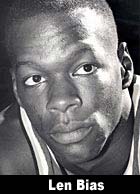
Len Bias – the death that ushered in two decades of destruction

A picture named LenBias.jpg
Today, June 19, is the 20 year anniversary of the death of Len Bias, and there are hundreds of stories in the newspapers remembering him. They are stories of lost promise, of what might have been, of basketball and of individuals who have been influenced by the Len Bias legend.
But few even touch on the real story — the fact that Len Bias’s death triggered a (possibly unintentional) near-genocidal attack on the African American population in the United States. Or at the very least, the systematic disenfranchisement of African American males.
Surprised? Skeptical? Read on and see what you think.

Posted in Uncategorized | Comments Off on Len Bias – the death that ushered in two decades of destruction

Help us create a 2006 Drug Policy Voting Guide

Here’s a great opportunity for everyone who reads this to get involved and make a contribution (without spending any money).
boxBack in 2004, I worked on a voting guide based on drug policy issues and managed to complete guides for 19 states, but I ran out of time to collect the information for the rest. Yet even those 19 state guides seemed to reach a lot of people, based on the email I got (and the large number of google-related visits).

This year, I’ve put together a voting guide framework using a wiki (a website structure that allows any registered user to make changes and add information, similar to Wikipedia).
The easy address to get there is http://voting.drugwarrant.com
How it works
Register for a free account (you don’t have to use your real name, but you do have to use an actual email address of some kind in order to complete your registration — to prevent spammers). Then, when you’re logged in, simply go to the state page you want to change, click on “edit,” type your information, click on “save.” That’s all there is to it!
There are special ways of coding things in a wiki that are different from other web applications (for things like bold or italic, etc.), and that information is available there as well. But if you don’t like dealing with that kind of thing, don’t worry about it. Just type. Someone else will come along and “pretty it up.”
Afraid of messing things up? Don’t be. Each page keeps past versions, so even if you mistakenly delete the whole thing, we can fix it.
What to enter?
Eventually, we’d love to have as much drug-policy-related information as possible on every race for Governor, U.S. Senate, and U.S. House, along with relevant state-wide initiatives. Depending on the interest within a state, we could continue on to State Senate and State House races — that’s really up to those adding information.
In some cases, you may be particularly interested in a single race (maybe because you’re working on it) — and that may be all that you enter. Or you may want to take on a state and start working on getting information entered. Or take a state that somone else started and expand on it.
There are lots of good sources of information that you can use. Vote-Smart.org provides detailed information on the candidates in each race, starting with who’s running (just getting that info entered is a huge help). Over the next few months, they will also be encouraging candidates to fill out position surveys on a variety of topics. The Senate and House candidate survey includes the following statements and asks if the candidate supports the statement:

  • Reduce prison sentences for those who commit non-violent crimes.
  • Support mandatory jail sentences for selling illegal drugs.
  • Expand federally sponsored drug education and drug treatment programs.
  • Decriminalize the possession of small amounts of marijuana.
  • Allow doctors to recommend marijuana to their patients for medicinal purposes.
  • Increase border security to stop the flow of illegal drugs into the United States.
  • Eliminate federal funding for programs associated with the “war on drugs.”
  • Increase financial support to Colombia to combat “the war on drugs.”

Those surveys should be helpful once they’re available.
Additionally, at the voting guide, we have some other sources of information, such as the Drug Policy Alliance 2005 Voter Guide (which lists how House members voted on specific bills or amendments). And of course, if you’re ambitious, you can use old-fashioned sleuthing — everything from reading their web-sites to calling their office — to get more information.
Finally, if even typing the information in the wiki is confusing, or you’d rather not register, feel free to email information to: voting@drugwarrant.net
We’ve got a little over 4 months to put together some useful information for voters. After all, when it comes to the drug war, we already know that the voters are ahead of the politicians. Let’s give them the information they need to put the politicians on notice.

Posted in Uncategorized | Comments Off on Help us create a 2006 Drug Policy Voting Guide

Missing the point of knock and announce

In comments below, Terry at US Marijuana Party mentions this story from back in April in Buffalo:

A loud “flash bang” concussion device is detonated inside a Kensington Avenue house as Buffalo Police SWAT officers, clad in black armor and brandishing automatic assault rifles, storm a lower apartment.
“Buffalo Police. Search warrant. Buffalo Police,” the officers yell to the now temporarily stunned occupants inside.
Within seconds, there are multiple shotgun blasts. At the same instant, another officer cradles a 1-year-old boy out the front door and down a flight of steps to safety.
When the smoke clears, three large pit bull terriers lay dead, in pools of their own coagulated blood. Five people are in handcuffs.

So first you deafen the occupants. Then you announce yourselves. Then you kill the dogs. This must be what Scalia was talking about when he said “we now have increasing evidence that police forces across the United States take the constitutional rights of citizens seriously.”
Right.

Posted in Uncategorized | Comments Off on Missing the point of knock and announce

Most idiotic post on Hudson so far

… and the winner is Glenn Reynolds:

However, the exclusionary rule is a lousy remedy for these kinds of things, since it doesn’t protect those innocent of any crime. (If you’re innocent, there’s nothing to exclude). I’d rather see a rule that disciplines officers for improper behavior without regard to the exclusion of evidence.

Now, it’s true that the exclusionary rule isn’t perfect, but as Breyer so eloquently stated it in his dissent, it’s been shown for ages to be the most effective solution. And the exclusionary rule isn’t just for guilty people (I get so tired of people asserting that rights are for the guilty). The whole purpose of the exclusionary rule is to protect all citizens. It’s a deterrent to future police misconduct, not a punishment for that misconduct. There’s a big difference.
People like Glenn seem to think that the idea is that the entire advantage of the exclusionary rule is that the bad guy gets off. That’s stupid. The advantage of the exclusionary rule is that when the bad guy gets off, the police will sit up and go “Well, that sucked — let’s not ever let that happen again!” and they won’t let it happen again. They’ll take the time to do it right — to get the facts right, and the law right. And we’ll all be safer and more free because of it.
This means that now and then a bad guy has to go free. That’s the price of insuring better work by the police in the future.
Now, the exclusionary rule can’t protect us from the really bad cop — the kind that tortures a suspect to get him to sign a consent form (other means are necessary to catch such vermin). The exclusionary rule protects us from the well-meaning, yet overzealous cop who cuts some corners to put the bad guy away. The rule says that cutting corners is not acceptable, and if you want to catch the bad guy, you’ve got to follow the law.
That’s an important principle. Without the exclusionary rule, who will tell the cops? And will they listen?
Glenn then follows his idiocy with:

I don’t see the Supreme Court fixing this any time soon. Congress could limit officers’ ability to barge in without announcing themselves (by banning it, say, except where there’s a serious risk of danger to people’s lives) by legislation. I doubt it will, though. States could do the same, of course, as regards state law enforcement. I think that they should.

Um, Glenn, I don’t know how to tell you this, but that’s already been banned by the Constitution — the Justices were in complete agreement about that part, just not on the proper punishment or deterrence. Congress banning it would do… what?
Update: It appears Andy McCarthy needs to go back to school as well. See Radley’s post.

Posted in Uncategorized | Comments Off on Most idiotic post on Hudson so far

More on Hudson

Breyer’s dissent (pdf) in the Hudson Supreme Court case is really impressive (if you’re a Constitutional rights geek like me, you’ll enjoy reading it). Here’s a justice who understands the importance of the 4th Amendment as part of our guarantee of freedom.
He methodically and thoroughly dismantles every one of the majority’s points, shows some real exasperation with Scalia’s lack of logic, and concludes:

There may be instances in the law where text or history
or tradition leaves room for a judicial decision that rests
upon little more than an unvarnished judicial instinct.
But this is not one of them. Rather, our Fourth Amendment
traditions place high value upon protecting privacy
in the home. They emphasize the need to assure that its
constitutional protections are effective, lest the Amendment
‘sound the word of promise to the ear but break it to
the hope.’ They include an exclusionary principle, which
since Weeks has formed the centerpiece of the criminal
law’s effort to ensure the practical reality of those promises.
That is why the Court should assure itself that any
departure from that principle is firmly grounded in logic,
in history, in precedent, and in empirical fact. It has not
done so. That is why, with respect, I dissent.

And what was Scalia’s justification for ignoring hundreds of cases of precedent? Because we don’t need it any more.

…we now have increasing evidence that police forces across the United States take the constitutional rights of citizens seriously

…except of course that he had no such evidence.
Via The Agitator (and Radley continues to be the go-to source for information on this), there’s an excellent editorial at The Orange County Register

Unfortunately, the ruling is likely to lead to more military-style no-knock raids of people’s homes and businesses, which will mean some innocent people’s homes will be raided, and a few people are likely to be killed. […]
The decision could mean, in effect, that every search warrant becomes a “no-knock” warrant.[…]
Since drug raids are often based on confidential informants whose reliability can be dicey, this decision is likely to lead to more military-style policing and more “wrong-door” raids on innocent people. It is wrong-headed and potentially tragic.

What’s particularly disturbing to me is that the new court seems to be on a very dangerous path for us. Already, the court had been way too lenient on allowing “drug war exceptions” to just about every part of the Bill of Rights, and deferring to the government in Fourth Amendment cases without requiring any proof of effectiveness. But now there seems to be a disturbing trend toward an “ends justifies the means” approach to policing.
In Caballes, Justice Stevens (who actually was on the correct side in Hudson) allowed a dog sniff without suspicion because revealing “no information other than the location of a substance that no individual has any right to possess does not violate the Fourth Amendment.” In other words — it was there, so it was OK to search for it to see if it was there. Convoluted logic and — ends justifies the means.
Now in Hudson, the majority opinion by Scalia claims that the legal search warrant would have discovered the drugs anyway, so the illegal entry doesn’t matter. The bizarre claim is that it’s too much of a penalty on the police to make them give up that particular case, because of the comparatively small infraction of neglecting to knock. But what the majority leaves out is what the cost is to the rest of society in having a government that no longer respects right of the people to be secure in their persons, houses, papers, and effects, against unreasonable searches and seizures.
Another disturbing part of this is that the majority is making the case that it really isn’t all that important for the police to obey the law. When we have the highest rate of citizen incarceration in the world, and yet at various levels of hierarchy we frequently now see clearly stated that the government is not required to obey the law, then what do we call ourselves?

Posted in Uncategorized | Comments Off on More on Hudson

Another loss for our rights

Link

The Supreme Court, in a 5-4 decision, ruled on Thursday that a violation by the police of the “knock-and-announce” rule when they enter a home with a warrant does not bar the use of evidence gathered in the search.

The tie was broken by Alito, who ruled in favor of the State of Michigan in Hudson v. Michigan.
Scalia wrote the opinion, joined by Alito, Thomas, Roberts, and Kennedy in part.
Dissenting were Breyer, Stevens, Souter, and Ginsburg.
A really bad decision. What’s the incentive for the cops to follow the law, if failure to do so allows them to use anything they found?
See Radley Balko’s earlier description of the case at Slate. He’s been all over it today. Here, here, here. Also Breyer cites Balko in his dissent (Page 10 – pdf)
Lyle Denniston at ScotusBlog has some interesting additional analysis on the ruling, including future implications for Fourth Amendment violations.

Posted in Uncategorized | Comments Off on Another loss for our rights

Meth, hysteria, and experts

The Sentencing Project has a new report (pdf) by Ryan King on methamphetamines that claims that media hype about the “epidemic” is, in many cases, overblown — something that we’ve already known for some time.
Here’s the start of the report:

Methamphetamine is a dangerous drug that represents a substantial
challenge to policymakers, health care professionals, social service
providers, and the law enforcement community. Over time, methamphetamine abuse can result in the deterioration of physical and mental capacities, the dissolving of family ties, diminished employment prospects, and a lifetime spent cycling through the criminal justice system. The consequences of irresponsible drug abuse harm not only the individual, but his or her family and the larger community. Thus, it is important that our public resources be effectively
directed to both prevent the development of such a habit as well as treat those
individuals before the proverbial die has been cast.
Unfortunately, the American strategy of drug control since the early 20th Century has emphasized an approach of prevention based on instilling fear about a substance through dramatized descriptions and images of the consequences of use coupled with a notion of treating people with harsh punishments out-of-step with the harm caused by the drug. Historically, the domestic response to drug use has been to demonize the drug and the people who use it while exaggerating the impact of its use (“You’ll be hooked the first time you try it”). This strategy has been complemented in the past two decades with mandatory minimums, sentencing enhancements, and a ban on access to services such as public housing, income assistance, and federal educational aid as the result of a drug conviction.

Seems like a reasonable start, right? And a good description of the problem.
Then I go over to The Drug Update where I see:

Sentencing Project Claims Methamphetamine is Not a Problem
In a recent press release, the Sentencing Project claimed that Methamphetamine is not a problem. However, drug policy expert Mark Kleiman disagrees with this. Go here for his thorough analysis.

Not a problem? That’s not the way I read the opening. So I looked further in the Sentencing Project report and found headings like:

Misleading media reports of a methamphetamine “epidemic” have hindered
the development of a rational policy response to the problem […]
Methamphetamine in America: The Extent of the Problem […]

In what possible way is the report saying that meth is not a problem?
Then I realized that Daniel probably made the mistake of reading Mark Kleiman’s post without questioning (a student’s mistake), and of not understanding Mark’s blind spots.
Let’s go to Mark’s “thorough” analysis: Even real drug problems get hyped. It’s long, it’s got anecdotes, and it has opinion, but thorough it is not.
It’s another opportunity for Mark to rail at Jack Shafer, someone he appears to despise with an unreasonable passion. He spends an inordinate amount of time in his article complaining about Jack’s suggestion that the media might look for a balanced approach to reporting and not over-hype the problem (A Meth Test for the Press
How will it respond to a nonhysterical new study?
by Jack Shafer) He’s done this with Jack Shafer before. Mark regularly uses Straw Man arguments in drug policy, and this is no exception.
Mark also rips apart the Sentencing Project’s report by claiming that the government data they use doesn’t tell the whole story. The Sentencing Project and Jack Shafer, however, both note that the data is imperfect, but conclude that a rational approach to the problem requires something other than hysteria.
Mark Kleiman, drug policy expert, “counters” with:

How big a problem methamphetamine is right now, and how big it’s likely to get, are matters mostly of guesswork. We don’t have the right data to make convincing current estimates or adequate models to make strong predictions. […]
Offhand, I’m not sure what to do about meth. […]
So it’s possible that the meth wave is less a problem we ought to be trying to fix than a situation we need to ty to adjust to as best we can. But that’s no excuse for pretending it’s not happening. Media criticism is good clean fun, but it’s no substitute for studying the actual phenomena.

????
So study the actual phenomena, Mark. And when you actually have something to contribute to the discussion, join in.

Posted in Uncategorized | Comments Off on Meth, hysteria, and experts

Happy Flag Day

This is only peripherally a drug war post, but I thought it was worth mentioning that this is flag day, and of course, Congress is once again considering a flag burning amendment as a dangerous distraction. Julian Sanchez at Hit and Run has done a pretty decent job of explaining why that’s stupid.
Let me give you my take.
If some idiot decides to burn a piece of red, white, and blue cloth in order to protest a government policy, my freedom is not endangered in any way, nor is my country.
A picture named ConstitutionBurning.gif
However, every day that Congress goes to work, my freedom is in jeopardy, through their continued destruction of the Constitution. And now they want to damage the Constitution further to promote a purely political agenda. I can’t even remember the last flag burning episode in the United States. The only ones who have been desecrating any flags are the politicians standing in front of them.
Celebrate your freedom today by fighting the politicians who would take it away.

Posted in Uncategorized | Comments Off on Happy Flag Day